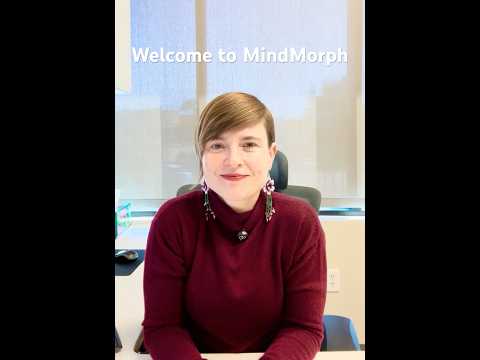
1.Osleidy Soria Pons, MA
Portland, OR 97239
Addiction · ADHD · Grief
orcounselors.com/provider/osleidy-soria-pons-portland-or
Find Oregon therapists specializing in Trauma and PTSD.
4,915 providers found
As of April 2026, hundreds of therapists listed on Oregon Counselors on this directory specialize in trauma and PTSD. Many of them offer telehealth, many accept Oregon Health Plan, many offer sliding-scale fees. Oregon's trauma specialists work across the full spectrum — single-incident PTSD (one assault, one accident, one combat deployment), complex / developmental trauma rooted in childhood, vicarious trauma in healthcare workers and first responders, medical trauma, and intergenerational trauma. The most well-established treatments here are EMDR (Eye Movement Desensitization and Reprocessing), Cognitive Processing Therapy (CPT), Prolonged Exposure (PE), Trauma-Focused CBT, Internal Family Systems (IFS), and Somatic Experiencing — and many therapists are trained in two or more so they can adapt to what your nervous system can tolerate. Phase-based pacing is the standard of care: stabilization first, then memory processing, then integration. You should not have to retell the worst day of your life in session one.
Enter a city to search within ~30 miles, telehealth therapists are shown statewide.
Showing the first 8 of 4,915 results.
Portland, OR 97239
Addiction · ADHD · Grief
In-person & Telehealth
orcounselors.com/provider/osleidy-soria-pons-portland-or
Milwaukie, OR 97222
ADHD · Grief · Trauma and PTSD
In-person & Telehealth
orcounselors.com/provider/cameron-panfely-milwaukie-or
Portland, OR 97233
ADHD · Grief · Trauma and PTSD
In-person & Telehealth
orcounselors.com/provider/rex-michael-portland-or
Beaverton, OR 97006
ADHD · Trauma and PTSD
In-person & Telehealth
orcounselors.com/provider/staci-watson-beaverton-or
Albany, OR 97321
Grief · Trauma and PTSD
In-person & Telehealth
orcounselors.com/provider/matthew-weaver-albany-or
Portland, OR 97232
Addiction · Self Esteem · Trauma and PTSD
In-person & Telehealth
orcounselors.com/provider/jesse-muir-portland-or
Tigard, OR 97223
ADHD · Trauma and PTSD
In-person & Telehealth
orcounselors.com/provider/rachel-ryan-tigard-or
Wilsonville, OR 97070
ADHD · Grief · Trauma and PTSD
In-person & Telehealth
orcounselors.com/provider/dayna-schroeder-wilsonville-or
MAPortland, ORIn-person & Telehealth
Community listing from public records, not yet authored by the provider.

MSMilwaukie, ORIn-person & Telehealth
Community listing from public records, not yet authored by the provider.
LicensePortland, ORIn-person & Telehealth
Community listing from public records, not yet authored by the provider.
ProfessBeaverton, ORIn-person & Telehealth
Community listing from public records, not yet authored by the provider.
MAAlbany, ORIn-person & Telehealth
Community listing from public records, not yet authored by the provider.
Professional Counselor AssociatePortland, ORIn-person & Telehealth
Community listing from public records, not yet authored by the provider.
MS, MFTA, APCTigard, ORIn-person & Telehealth
Community listing from public records, not yet authored by the provider.
MAWilsonville, ORIn-person & Telehealth
Community listing from public records, not yet authored by the provider.
Fewer than 3 providers match this specialty directly. These licensed Oregon telehealth providers may also be able to help.


Meet these providers before you reach out.
From Oregon providers writing about this topic.

I am not a prescriber. I do not recommend medications or comment on what anyone should take. What I can do is explain how the two kinds of help differ, because people are often choosing between them without being told they are not the same thing.

In Oregon, a 14-year-old can consent to their own outpatient mental health treatment. That surprises most parents and most teenagers. Here is what the law actually says and how I work with it in practice.

If you came looking for an autism evaluation, I want to answer that in the first sentence rather than the last. I do not provide one. Here is what I can do instead, and where assessment actually comes from.

Welcome to iFinish Strong Enrichment Center, where we believe that understanding your mental health can be an important step toward healing, growth, and living well. I’m Dr. Sandra Stubbs, and I invite you to visit us at ifscounseling.net. Our website is a great place to learn more about who we…

If you’re constantly overwhelmed, overthinking, or struggling to focus, you might wonder: Is this anxiety – or could it be ADHD? For many women, the answer is surprising. ADHD in women is frequently misdiagnosed as anxiety, leading to years of frustration and treatment that only partially helps. Understanding the difference…

Over the past several years, conversations about mental health have become more common across Oregon. As more people speak up about struggling with mental health issues, the stigma surrounding mental health conditions like depression has shown signs of receding in Oregon. More people are seeking help, employers are expanding mental…
Researched data on this topic, every figure links to its source.
About 6 of every 100 people (6%) in the U.S. will have PTSD at some point in their lives, and about 5% have PTSD in a given year — roughly 13 million Americans in 2020 (VA National Center for PTSD).
Source: VA National Center for PTSD (2020)PTSD is about twice as common in women (8% lifetime) as in men (4% lifetime) in the U.S. (VA National Center for PTSD).
Source: VA National Center for PTSD (2020)Among Iraq/Afghanistan-era (OIF/OEF) veterans, an estimated 29% have PTSD over their lifetime and 15% in the past year — higher than the 7% lifetime rate across all veterans (VA National Center for PTSD).
Source: VA National Center for PTSD (2023)The NESARC-III survey of over 36,000 U.S. adults (2012-2013) found a 6% lifetime PTSD prevalence under DSM-5 criteria, 8% in women and 4% in men (VA National Center for PTSD).
Source: VA National Center for PTSD (2013)EMDR (Eye Movement Desensitization and Reprocessing) is recognized by the APA, the WHO, and the VA as a treatment for PTSD; APA gives it a conditional recommendation as a structured trauma therapy (APA).
Source: American Psychological Association (2024)Common questions about this coverage in Oregon.
Oregon Counselors Directory lists hundreds of therapists specializing in trauma and PTSD across Oregon. Of these, many offer telehealth, providing accessible services for residents in both rural and urban areas. Many therapists listed on Oregon Counselors accept the Oregon Health Plan (OHP), which can cover therapy sessions for eligible individuals at low or no cost. Many providers offer sliding scale fees, catering to those whose income or insurance situations fall outside standard coverage. These providers utilize evidence-based approaches such as Cognitive Processing Therapy (CPT), Eye Movement Desensitization and Reprocessing (EMDR), and Prolonged Exposure Therapy (PE) to address trauma and PTSD.
Oregon Advantage
Oregon leads the nation in access to psychedelic-assisted and integrative mental health therapies.