Specialties

Anxiety Therapists in Oregon

Anxiety is the most common mental health condition in Oregon, affecting roughly 1 in 5 adults. Oregon therapists who specialize in anxiety use evidence-based approaches like CBT, exposure therapy, and mindfulness to help you manage worry, panic attacks, and generalized anxiety disorder.

2,017 providers found

Anxiety also matches related terms: eco-anxiety, Postpartum Anxiety. Results below include all of them.

As of April 2026, Oregon Counselor Directory lists hundreds of therapists listed on Oregon Counselors who specialize in anxiety, panic disorder, social anxiety, and related conditions. Of those, many offer telehealth so you can be matched with someone outside your immediate area; many accept Oregon Health Plan (OHP); many offer sliding-scale fees for clients who are uninsured or out-of-network; The directory's anxiety specialists draw from evidence-based approaches including Cognitive Behavioral Therapy (CBT), Acceptance and Commitment Therapy (ACT), Eye Movement Desensitization and Reprocessing (EMDR) when anxiety is rooted in a specific traumatic event, exposure-and-response prevention (ERP) for OCD-spectrum anxiety, and somatic / mindfulness-based work for the body component. You can filter by city, insurance, modality, sliding scale, telehealth, and current availability — and most therapists offer a free 15-minute consultation so you can find the right fit before committing.

2,017providers listed
Licensed& verified
Telehealthoptions
OHP & insuranceaccepted
Refine

Filters

Therapy for

City or ZIP

Find any filter

Specialty

Modality

Insurance

Gender

Faith integration

Client age

Options

Featured Clinic

Left Coast Wellness

Eugene Telehealth In-person OHP
Parenting LGBTQ+
Left Coast Wellness logo
Visit clinic

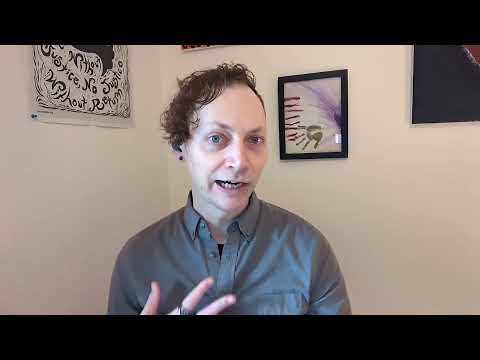
Video Introductions

Meet these providers before you reach out.

Related Articles

From Oregon providers writing about this topic.

Welcome to iFinish Strong Enrichment Center

Welcome to iFinish Strong Enrichment Center

Welcome to iFinish Strong Enrichment Center, where we believe that understanding your mental health can be an important step toward healing, growth, and living well. I’m Dr. Sandra Stubbs, and I invite you to visit us at ifscounseling.net. Our website is a great place to learn more about who we…

iFinish Strong
ADHD vs Anxiety in Women: How to Tell the Difference (and Why It Matters)

ADHD vs Anxiety in Women: How to Tell the Difference (and Why It Matters)

If you’re constantly overwhelmed, overthinking, or struggling to focus, you might wonder: Is this anxiety – or could it be ADHD? For many women, the answer is surprising. ADHD in women is frequently misdiagnosed as anxiety, leading to years of frustration and treatment that only partially helps. Understanding the difference…

Well Coast Medical Corporation
Why African Immigrants and Refugees Struggle to Access Mental Health Care in Oregon — And What We're Doing About It

Why African Immigrants and Refugees Struggle to Access Mental Health Care in Oregon — And What We're Doing About It

By Hussein Idow, CSWA, MSW, QMHP, CADC-II-R | Healing Power Therapy, LLC | Portland, Oregon If you've ever sat across from a Somali mother who hasn't slept in months, a Congolese father who can't explain why he feels numb, or an Ethiopian young adult who is told by their family…

Healing Power Therapy LLC
Anxiety and Emotional Exhaustion: Why You Feel So Tired

Anxiety and Emotional Exhaustion: Why You Feel So Tired

Anxiety can feel incredibly tiring. If you feel overly anxious or worried, you might notice: Feeling drained, even after a typical day Frequently feeling on edge, followed by having very little energy left for everyday tasks Wanting to isolate or pull back from others due to fatigue Why Anxiety Is…

Grace Mavromatis
Scheduled Worry Time: The Counterintuitive CBT Technique for Chronic Worriers

Scheduled Worry Time: The Counterintuitive CBT Technique for Chronic Worriers

Telling an anxious mind to stop worrying never works. A stranger CBT move does better: give worry its own appointment. Here is the evidence behind scheduled worry time and exactly how to use it.

Cognitive Tools Network
How Anxiety Fuels Rumination and What to Do

How Anxiety Fuels Rumination and What to Do

Overthinking can feel like problem-solving, but it often leaves people more anxious, more tired, and less clear than when they started. A person may replay a conversation, worry about what someone meant, imagine the worst possible outcome, or mentally rehearse every decision before taking action. At first, it can seem…

Randy Wild
View all resources →

Anxiety in Oregon, key facts

Researched data on this topic, every figure links to its source.

U.S.

An estimated 19.1% of U.S. adults had an anxiety disorder in the past year, and 31.1% experience one at some point in life, making anxiety disorders the most common mental health condition (NIMH).

Source: NIMH (2017)
U.S.

Past-year anxiety disorders are far more common in women (23.4%) than men (14.3%) among U.S. adults (NIMH).

Source: NIMH (2017)
U.S.

In 2023, 32.3% of U.S. adults reported symptoms of anxiety or depression, rising to 50% among adults ages 18-24 (KFF analysis of the Census Household Pulse Survey).

Source: KFF (2023)
U.S.

Among U.S. adults with past-year generalized anxiety disorder, about 32.3% had serious impairment and 44.6% moderate impairment (NIMH).

Source: NIMH (2017)

Frequently asked questions

Common questions about this coverage in Oregon.

How do I find an anxiety therapist in Oregon who actually has openings?
Many therapists keep a waitlist that's shorter than it sounds — call or email two or three at once and the first to respond is usually within a week.
What kind of therapy works best for anxiety — CBT, EMDR, or medication?
For most anxiety disorders, Cognitive Behavioral Therapy (CBT) has the strongest evidence base — it teaches you to identify and rework the thought patterns that fuel anxious spirals, and most people see meaningful relief in 12–20 sessions. EMDR is more commonly used when the anxiety stems from a specific traumatic event. Medication (typically SSRIs or short-term benzodiazepines) is prescribed by a psychiatrist or psychiatric nurse practitioner — not a therapist — and works best alongside therapy, not as a replacement. Many Oregon clients combine weekly therapy with a low-dose SSRI for the first 6–12 months.
Can a therapist prescribe anti-anxiety medication in Oregon?
Only psychiatrists, psychiatric nurse practitioners (PMHNPs), and primary care doctors can prescribe medication in Oregon. Therapists, counselors, and psychologists cannot. If you're looking for a "one-stop" experience, search our prescriber directory at /prescribers — many work in coordination with talk therapists. Some clients see a PMHNP every 1–3 months for medication management while doing weekly therapy with a separate counselor.
How long does anxiety therapy usually take?
Most evidence-based anxiety therapies are short-term by design. Standard CBT runs 12–20 weekly sessions, and many clients notice meaningful change by session 6–8. Generalized anxiety or anxiety with co-occurring trauma sometimes requires 6–12 months of work. Therapy isn't open-ended — a good therapist will set goals with you in the first 1–2 sessions and check in every few months on your progress.
Will my insurance cover anxiety therapy in Oregon?
Almost certainly yes. Oregon's mental health parity laws require commercial insurance and OHP to cover medically necessary mental health treatment at the same level as physical health.
Is online therapy effective for anxiety, or do I need to be in-person?
Online therapy is as effective as in-person for most anxiety disorders — multiple randomized trials confirm this for generalized anxiety, social anxiety, and panic disorder. Specific phobias and severe agoraphobia sometimes benefit from in-person exposure work.
Should I use ChatGPT or an AI app for anxiety instead of a therapist?
AI tools can be a useful supplement — for journaling, reframing thoughts at 2 a.m., or practicing what you want to say in a hard conversation. They are not a substitute for a licensed therapist for moderate or severe anxiety, panic disorder, or anxiety with trauma roots. Studies through 2026 are clear that AI chat can validate distorted thinking back to you and lacks the relational repair that drives clinical change.
Is it really anxiety, or is my gut trying to tell me something?
Both can be true at once and a good therapist helps you tell them apart. A useful test: anxiety is usually loud, urgent, and gets worse the more you avoid the situation. Genuine intuition is usually quiet, neutral about the outcome, and stays consistent over weeks. If a feeling spikes whenever you think about a specific person, place, or pattern (and only there), it is more likely a signal worth listening to. If it spikes everywhere — work, relationships, driving, future planning — that points to anxiety. Therapy can help you build the discrimination muscle so you stop second-guessing every gut feeling.
What is exposure therapy and is it as scary as it sounds?
Exposure therapy is the gold-standard treatment for phobias, OCD, and panic disorder. The name sounds harsher than the practice — a trained Oregon therapist builds a graded "fear ladder" with you, starting with the easiest version of the trigger and only moving up after each rung feels manageable. You stay in control of the pace. Modern exposure work also uses imaginal exposure (rehearsing the feared scenario in detail) and interoceptive exposure (recreating the body sensations of panic) so you can do most of it without leaving the office. Most clients report exposure feels challenging in sessions 2–6 and surprisingly empowering by session 10.
Can I use psilocybin or ketamine to treat anxiety in Oregon?
Oregon has legal psilocybin services through licensed Service Centers (Measure 109), but psilocybin is approved for general adult use and not specifically prescribed for anxiety. Some Oregonians explore it for anxiety adjacent to existential or end-of-life concerns. Ketamine-assisted psychotherapy (KAP) is more established for treatment-resistant anxiety and depression and is offered at several Oregon clinics. Both work best when paired with a regular therapist for integration — see /treatments/psychedelics for prescriber and KAP-trained Oregon therapists. Neither replaces evidence-based talk therapy as a first-line treatment.
What's the difference between an anxiety attack and a panic attack?
Clinically there is no formal distinction — both refer to the same physiological event: a sudden surge of adrenaline that produces racing heart, shortness of breath, dizziness, chest tightness, and a sense of impending doom. The DSM-5 only formally defines panic attacks. "Anxiety attack" is the colloquial term people use for milder, slower-onset episodes that don't fully meet panic criteria. Either way, the treatment is the same: targeted CBT (cognitive restructuring + interoceptive exposure) usually resolves them in 8–12 sessions for the majority of clients.
What is generalized anxiety disorder versus social anxiety versus panic disorder?
Generalized anxiety disorder (GAD) is persistent, free-floating worry about everyday things — work, money, relationships, health — that lasts at least six months and is hard to control. Social anxiety disorder is fear of being scrutinized or judged in social or performance situations, often paired with avoidance. Panic disorder is recurrent unexpected panic attacks, usually with avoidance of places where another attack might occur. Treatment overlaps (CBT works for all three) but the targets differ — exposure for social anxiety and panic, worry-postponement and tolerance-of-uncertainty work for GAD.
Will I need to talk about my childhood, or can we just focus on what's happening now?
Modern anxiety treatment is mostly present-focused. Standard CBT looks at current thought patterns, behaviors, and triggers rather than excavating childhood. That said, if your anxiety has trauma origins or attachment-based roots, your therapist may suggest including some history work because the patterns repeat. You always have the right to set the pace; a good Oregon therapist will follow your lead and only widen the lens with your consent.
How do I know if my anxiety is bad enough to need therapy?
The honest threshold isn't severity — it's interference. If anxiety is changing what you do (avoiding situations, declining invitations, leaving jobs, missing sleep, snapping at people you love) or how you feel most days, therapy will help. You don't need to be in crisis to benefit; in fact, earlier work tends to resolve faster.
Does therapy actually work for anxiety, or do I just need medication?
For most people, therapy works — cognitive behavioral therapy (CBT) and exposure-based approaches have strong evidence for generalized anxiety, panic, and social anxiety, and many people improve without medication. Medication (often an SSRI) can help when symptoms are severe or therapy alone isn't enough, and the two are frequently combined. A licensed Oregon therapist can help you decide and, if needed, refer you to a prescriber.
How many therapy sessions does it take to see anxiety improve?
Many people notice early relief in the first 4–6 weekly sessions as they learn to manage symptoms, with a typical course of structured anxiety therapy running about 12–20 sessions. Chronic or trauma-linked anxiety can take longer. Your therapist will set a pace with you and adjust based on progress.
How much does anxiety therapy cost in Oregon, and will insurance cover it?
In Oregon, out-of-pocket sessions commonly run about $100–$200, but most commercial plans and the Oregon Health Plan (OHP) cover outpatient mental health, often with a low or $0 copay on OHP. Use the filters on this page to show only therapists who take your insurance, offer sliding-scale fees, or accept OHP.
What happens in the first anxiety therapy session?
The first session is mostly an intake: your therapist asks about your symptoms, triggers, history, and goals, explains confidentiality, and you both decide if it's a good fit. You won't be pushed to relive anything you're not ready for — early sessions focus on understanding your anxiety and building a plan.
Should I see a therapist or can I manage anxiety on my own?
Self-help tools (breathing, exercise, sleep, limiting caffeine) genuinely help mild anxiety. Consider a professional when anxiety is persistent, interferes with work, sleep, or relationships, or includes panic attacks or avoidance. Many Oregon therapists offer telehealth, so you can start from home — filter for 'Telehealth' and 'Accepting clients' above.
How many Oregon therapists specialize in anxiety?
there are hundreds of therapists specializing in anxiety treatment, providing a range of services to address anxiety disorders and related concerns.
Do Oregon anxiety therapists accept OHP / Oregon Health Plan?
Yes, many therapists specializing in anxiety accept the Oregon Health Plan (OHP), offering affordable therapy options to eligible clients under Oregon's Medicaid program.
Is telehealth available for anxiety in Oregon?
Telehealth is available for anxiety treatment in Oregon, with hundreds of therapists offering virtual sessions, making therapy accessible to clients across the state.
Do Oregon anxiety therapists offer sliding scale fees?
A total of many therapists specializing in anxiety offer sliding scale fees, providing financial flexibility for clients who may not have insurance or need assistance with out-of-pocket costs.

Hundreds of therapists listed on Oregon Counselors specialize in anxiety treatment. Hundreds of providers offer telehealth sessions, enabling access to care for Oregonians across the state, including those in rural areas. Many therapists accept Oregon Health Plan (OHP), Oregon's Medicaid program, providing a low-cost or no-cost path to treatment. Many providers offer sliding scale fees, assisting clients whose financial circumstances fall outside typical insurance coverage. Evidence-based approaches such as Cognitive Behavioral Therapy (CBT), Acceptance and Commitment Therapy (ACT), and Eye Movement Desensitization and Reprocessing (EMDR) are commonly used.

Oregon Cities

Specialties

Therapy Modalities

Alternative Therapies

Oregon Advantage

Oregon leads the nation in access to psychedelic-assisted and integrative mental health therapies.
View all Oregon therapies →