This lesson is for a therapist who keeps hearing that search has changed, that AI answers are replacing the list of links, and that there is a new discipline called AEO they need to pay for. I built this directory and I read its Search Console every week, so I went to what Google publishes about its own AI features rather than what agencies publish about them. The short version: Google says the AI features run on the same index as the ordinary results, nothing extra is required to appear in them, and the honest timeline for any of this is still months. The video above is Google's own Search Off the Record episode on how AI is changing search, published May 1, 2026, and I include it because it is Google's engineers talking, not a vendor.
1. What AEO means, and what Google says about it
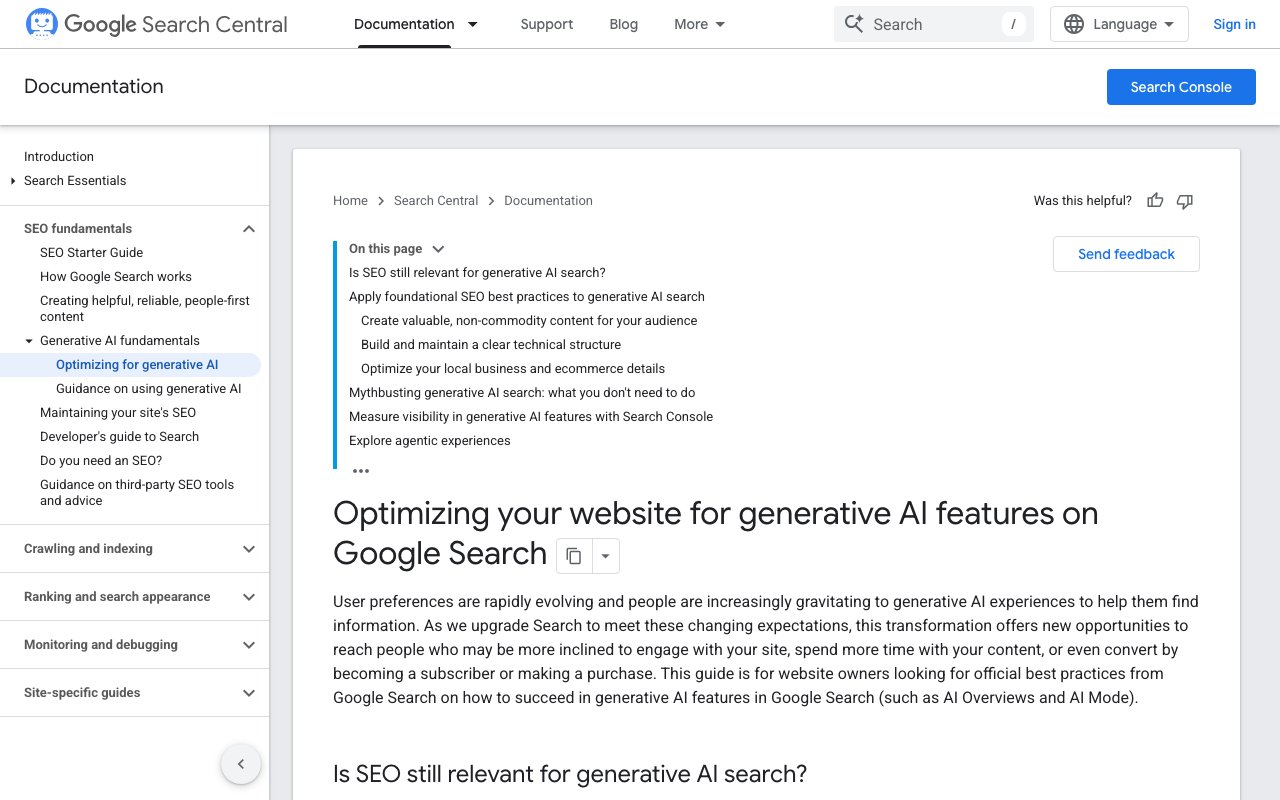
AEO stands for answer engine optimization; GEO is the same idea with "generative" in front. Google's guide to optimizing for generative AI features, last updated July 10, 2026, settles the question in one sentence: "optimizing for generative AI search is optimizing for the search experience, and thus still SEO." The same page tells site owners to be skeptical of services sold under those labels and to check any advice against Google's own guidance. When an email arrives offering to get your practice "into the AI answers," that page is the reply.
2. AI Overviews and AI Mode: how a page gets in
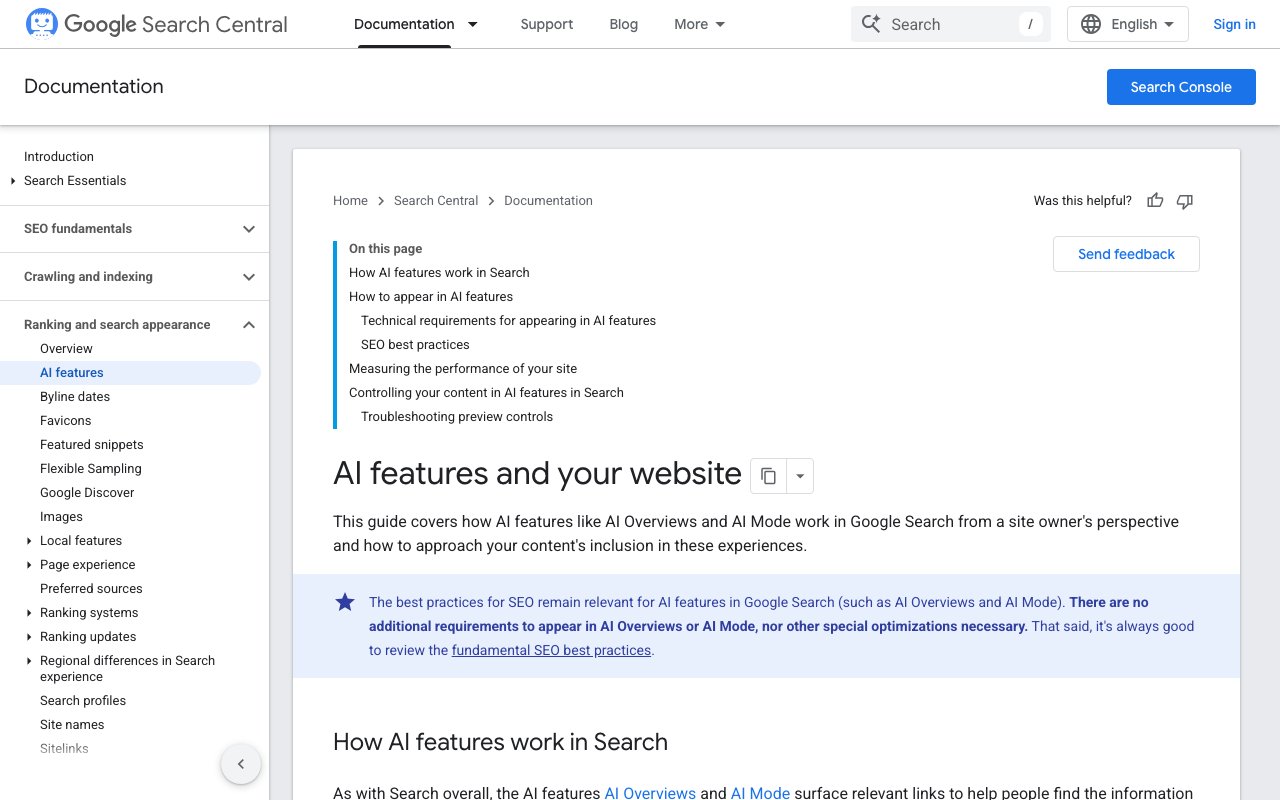
Google's page on AI features and your website (last updated December 10, 2025) says: "There are no additional requirements to appear in AI Overviews or AI Mode, nor other special optimizations necessary." To be cited, a page "must be indexed and eligible to be shown in Google Search with a snippet." And then, plainly: "You don't need to create new machine readable files, AI text files, or markup." For a practice site, that means the service page you already have is eligible the moment it is indexed. The work is the same work: a page that says what you do, for whom, where, and what it costs, written by you.
3. Should you write an llms.txt file?
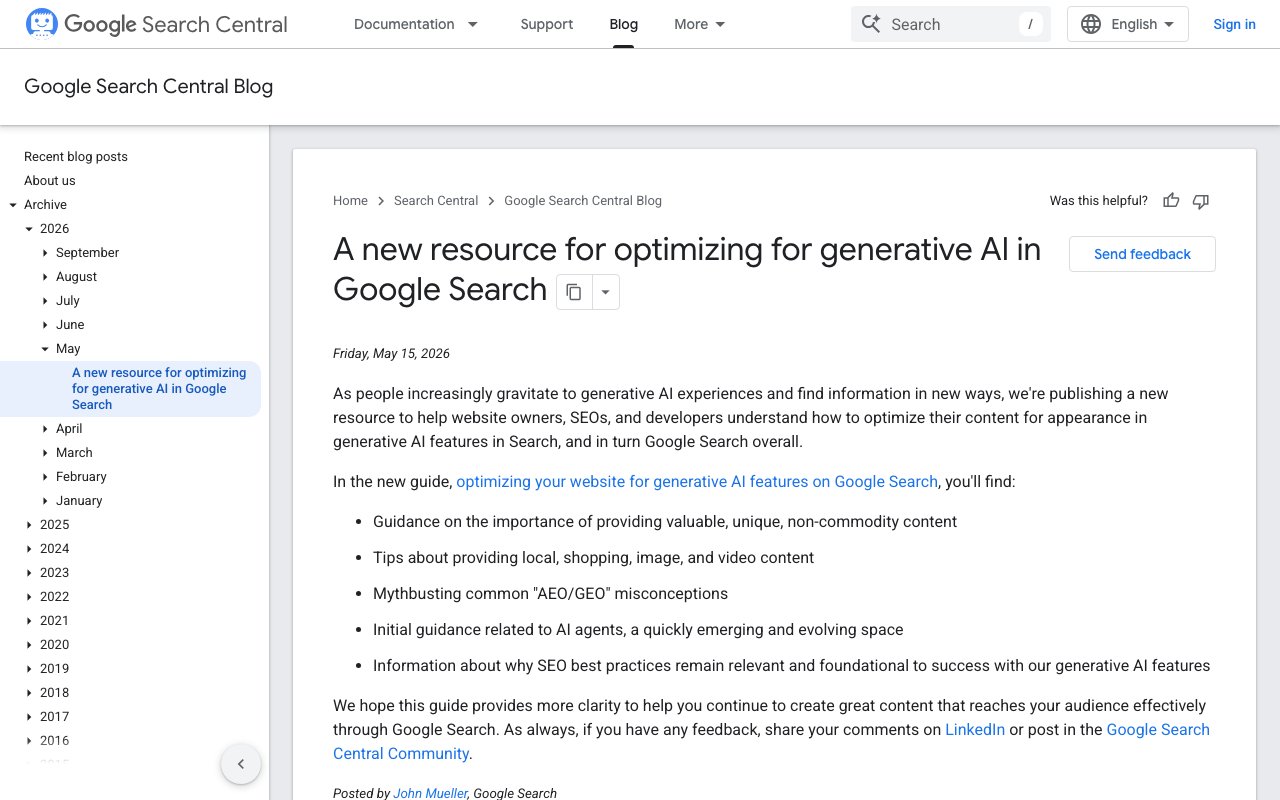
An llms.txt file is a plain-text summary of a site meant for AI crawlers, and it is the most common thing I see sold as AEO. Google announced its AI guidance in a Search Central blog post in May 2026. On the file itself, a May 20, 2026 report in Search Engine Journal quotes Google's John Mueller comparing llms.txt to the old keywords meta tag ("no AI services used it and bots didn't request the file") and Gary Illyes saying Google is "not pursuing llms.txt." I could not reach Google's own verbatim statement, so that fact comes through trade press quoting Google staff, and I mark it that way. On the OpenAI side, its crawler documentation governs bots through robots.txt; I found no OpenAI statement that ChatGPT reads or prefers llms.txt. Both OpenAI's and Perplexity's own pages blocked my automated fetch, so I cannot quote them on how they choose sources; open their help pages in a normal browser and read them yourself before believing anyone's summary, including mine. If your web person wants to add the file, it is harmless. Paying for it is the problem.
4. Structured data: what applies to a therapist's page
Structured data is a block of code that tells search engines, in a fixed format, what a page is about. Google's AI guide says: "Structured data isn't required for generative AI search, and there's no special schema.org markup you need to add." What still applies is the ordinary local business markup (last updated September 8, 2026), which feeds the details in a knowledge panel. Schema.org does define a Physician type, a subclass of MedicalBusiness and, through it, LocalBusiness, but Google's structured data gallery (last updated June 15, 2026) lists no Physician-specific result. Use the general local business markup, fill in name and address, and stop there. The setup is walked through in local SEO for therapists.
5. FAQ schema: why the Q&A trick stopped working
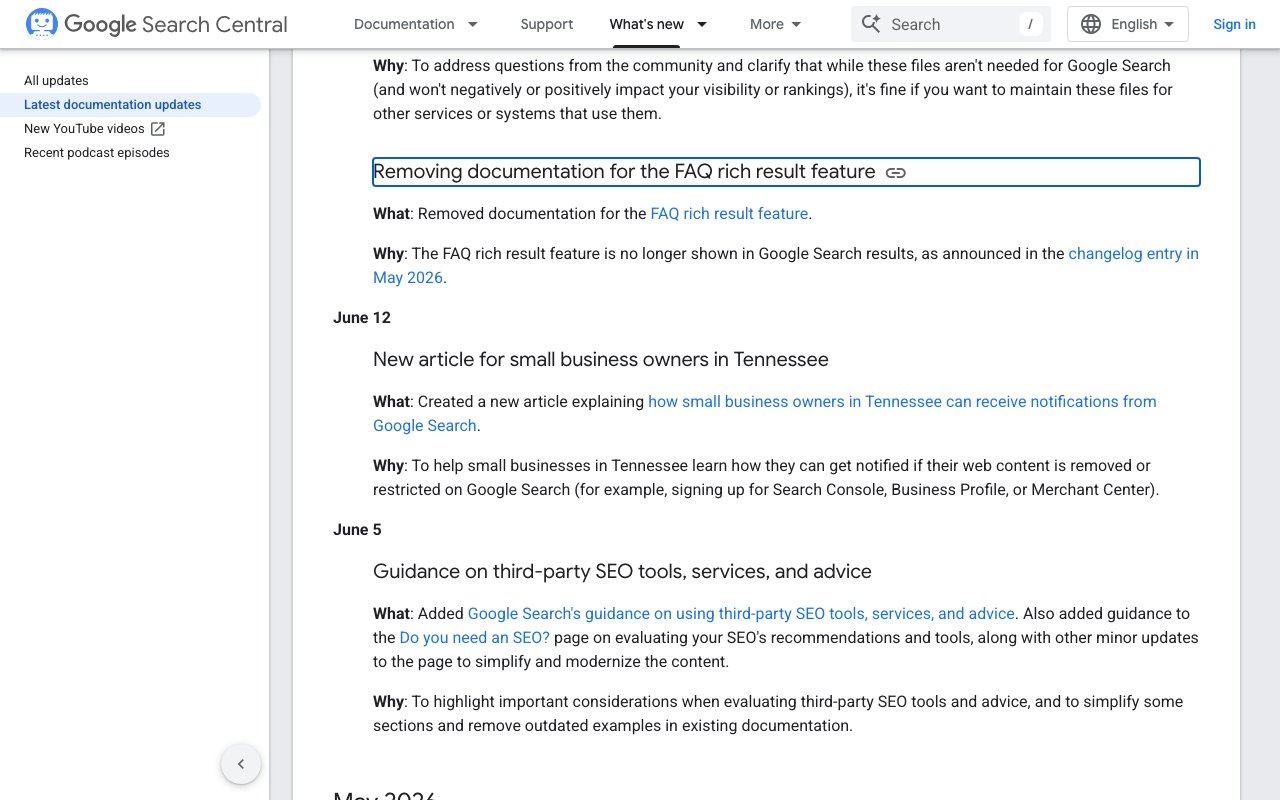
For a few years, a tidy block of questions and answers marked up as FAQPage could earn a page extra lines in the results. Google restricted that feature on September 14, 2023 to well-known government and health sites, and a May 2026 changelog entry says the FAQ rich result "is no longer shown in Google Search results" for anyone. The old documentation page now redirects to that changelog entry. An FAQ section is still fine for the person reading your site. Just do not expect Google to decorate it.
6. How long it takes: Google's current words and the old ones
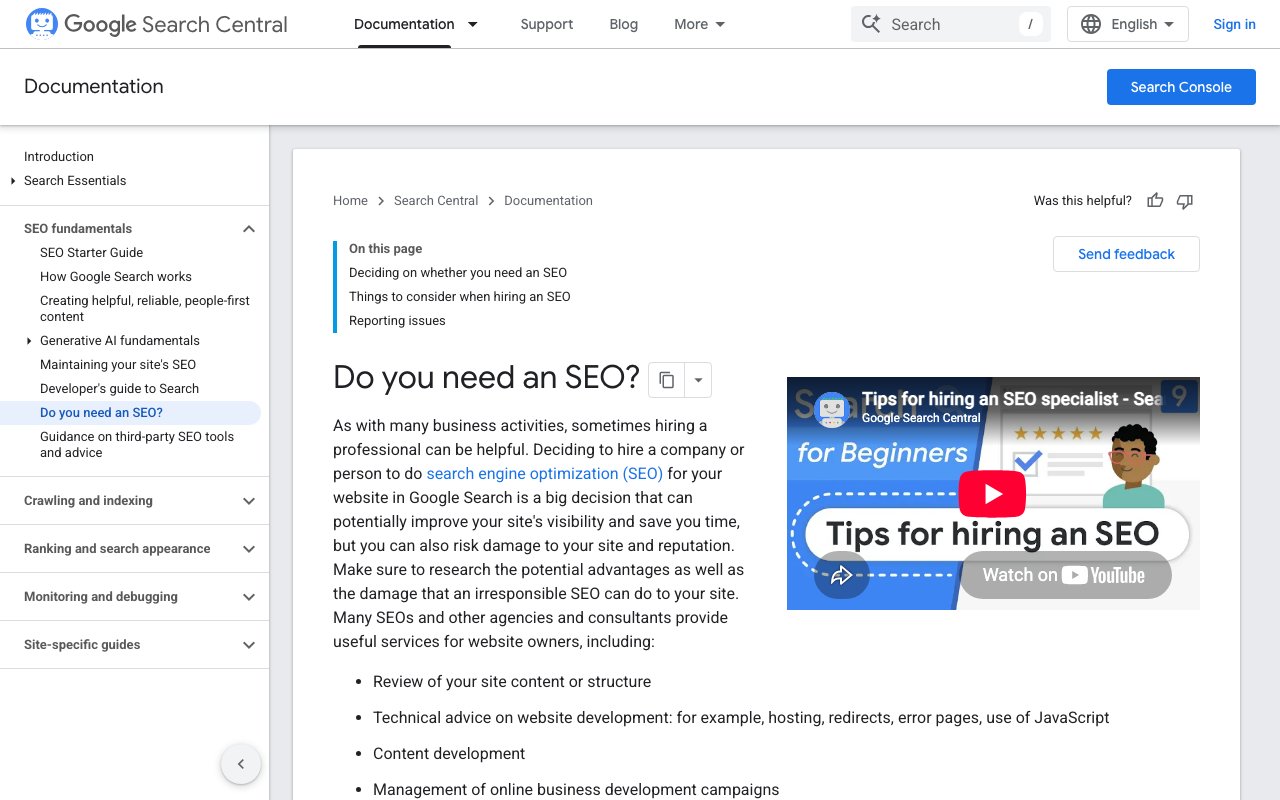
You will read that Google says SEO takes "four months to a year." That line comes from a Google Webmasters video with Maile Ohye, a Google tech lead, from around 2015. Google's current page, Do you need an SEO? (last updated June 5, 2026), gives no timeframe at all; I searched its full text for the word "month" and it is not there. What the page does give you is a question to put to anyone you might hire: "What kind of results do you expect to see, and in what timeframe?" It also says: "No one can guarantee a #1 ranking on Google." So the honest phrasing is that Google has historically said months, and today says only that you should ask. My own directory's average position moved about five places over roughly six weeks this summer, and that story, with the numbers, is in what a directory profile does for you.
7. E-E-A-T, YMYL, and the higher bar for mental health
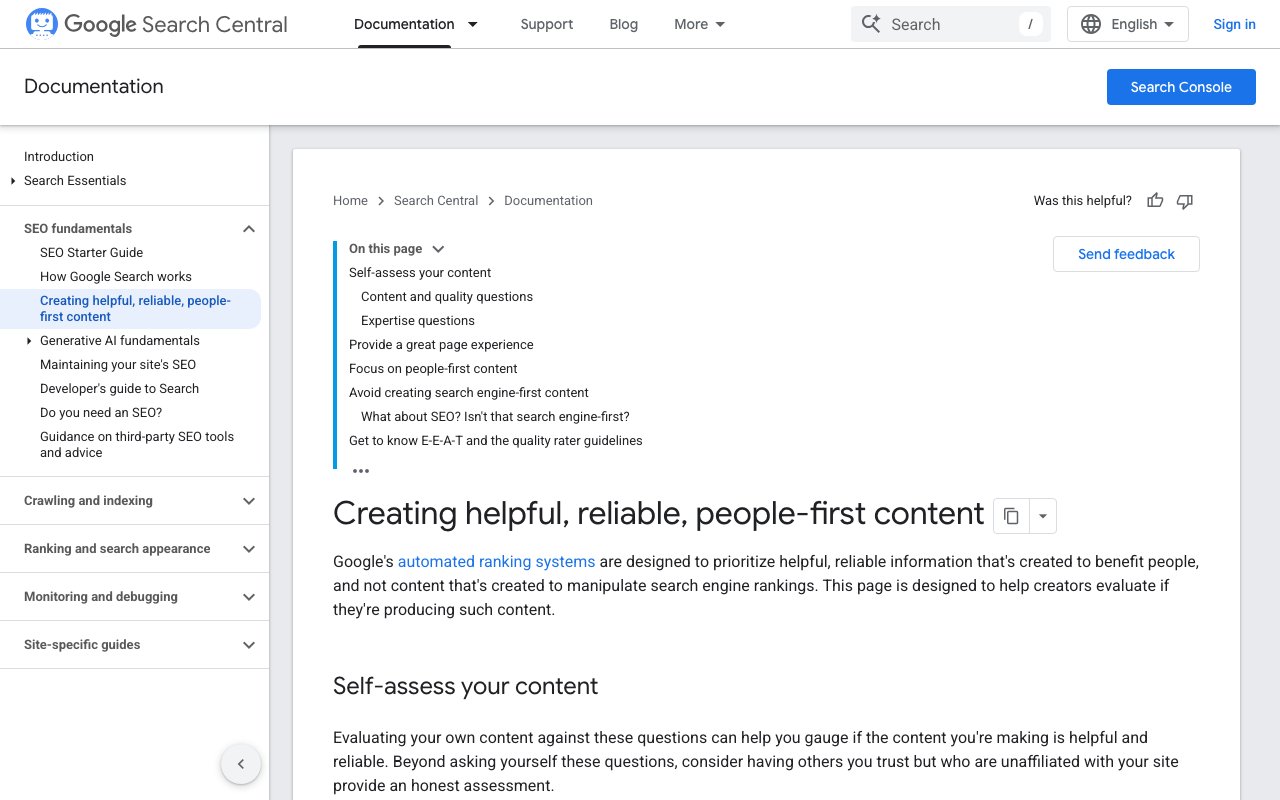
Google's page on creating helpful, reliable, people-first content (last updated December 10, 2025) names its quality framework as E-E-A-T: experience, expertise, authoritativeness, trustworthiness. It says "of these aspects, trust is most important," and that its systems "give even more weight to content that aligns with strong E-E-A-T for topics that could significantly impact the health, financial stability, or safety of people." That category, which Google's raters call Your Money or Your Life, includes what you and I write. The rater guidelines that define it, a public PDF, were last updated September 11, 2025 and stayed in force through Google's May 21, 2026 core update. In practice: put your real name, credentials and license on the page, use a photo of you, and say who wrote what. Anonymous health advice is exactly what the guidance is built to discount.
8. How a directory listing feeds your own site
Google's Business Profile help page on local ranking names three factors, relevance, distance and prominence, and states that "there's no way to request or pay for a better local ranking on Google." Prominence, in Google's words, is based on "info like how many websites link to your business and how many reviews you have." A directory profile is one of those websites. It does its part by carrying your name, address and phone exactly as your own site does, and by linking to you. It does not rank your site for you, and I will not claim how much one listing counts.
9. What to expect, and how to watch it
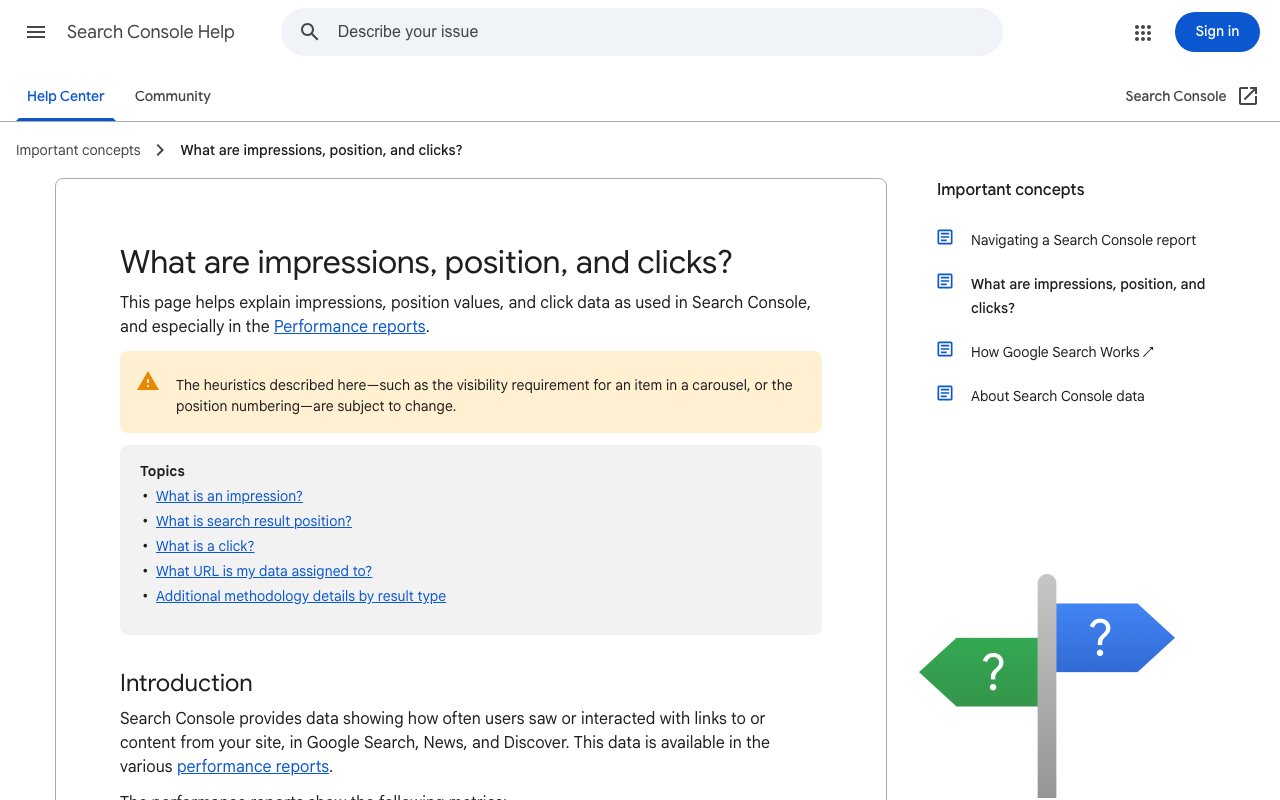
Set up Search Console for your own site and read three numbers a month: impressions, position and clicks. Google's help page defines each one. Impressions tell you whether Google shows you at all; position tells you where; clicks tell you whether anyone chose you. Judge changes in months. Judge vendors by whether they will answer Google's question about timeframe in writing. And judge any AEO offer against step 1.
This is what Google's linked pages say and what I do for my own site; it is not marketing or legal advice, and your licensing board has the final word on anything client-facing.
Sources
- “Google's guide to optimizing for generative AI features on Google Search.” Google Search Central, Jul 10, 2026. Last updated date shown on the page. https://developers.google.com/search/docs/fundamentals/ai-optimization-guide (accessed Sep 24, 2026).
- “AI features and your website.” Google Search Central, Dec 10, 2025. Last updated date shown on the page. https://developers.google.com/search/docs/appearance/ai-features (accessed Sep 24, 2026).
- “A new resource for optimizing for generative AI in Google Search.” Google Search Central Blog. Month from the URL; day not shown. https://developers.google.com/search/blog/2026/05/a-new-resource-for-optimizing (accessed Sep 24, 2026).
- “Google's llms.txt guidance depends on which product you ask.” Search Engine Journal, May 20, 2026. Trade press quoting Google staff; Google's own statement not read directly. https://www.searchenginejournal.com/googles-llms-txt-guidance-depends-on-which-product-you-ask/575431/ (accessed Sep 24, 2026).
- “Local business (LocalBusiness) structured data.” Google Search Central, Sep 8, 2026. Last updated date shown on the page. https://developers.google.com/search/docs/appearance/structured-data/local-business (accessed Sep 24, 2026).
- “Physician.” Schema.org. https://schema.org/Physician (accessed Sep 24, 2026).
- “Structured data markup that Google Search supports.” Google Search Central, Jun 15, 2026. Last updated date shown on the page. https://developers.google.com/search/docs/appearance/structured-data/search-gallery (accessed Sep 24, 2026).
- “Latest documentation updates: removing documentation for the FAQ rich result feature.” Google Search Central. The faqpage URL now redirects to the changelog entry. https://developers.google.com/search/docs/appearance/structured-data/faqpage (accessed Sep 24, 2026).
- “Do you need an SEO?.” Google Search Central, Jun 5, 2026. Last updated date shown on the page. https://developers.google.com/search/docs/fundamentals/do-i-need-seo (accessed Sep 24, 2026).
- “Creating helpful, reliable, people-first content.” Google Search Central, Dec 10, 2025. Last updated date shown on the page. https://developers.google.com/search/docs/fundamentals/creating-helpful-content (accessed Sep 24, 2026).
- “Search Quality Rater Guidelines.” Google, Sep 11, 2025. https://guidelines.raterhub.com/searchqualityevaluatorguidelines.pdf (accessed Sep 24, 2026).
- “Tips to improve your local ranking on Google.” Google Business Profile Help. No revision date shown. https://support.google.com/business/answer/7091?hl=en (accessed Sep 24, 2026).
- “What are impressions, position, and clicks?.” Search Console Help. No revision date shown. https://support.google.com/webmasters/answer/7042828?hl=en (accessed Sep 24, 2026).
- “How AI Is Changing Google Search and SEO.” Search Off the Record, YouTube, May 1, 2026. The lesson video. https://www.youtube.com/watch?v=_R04ySodhGE (accessed Sep 24, 2026).
Documents
Templates and worksheets that go with this lesson.
Search and AI answers checklist