LegitScript comes up the moment a therapist opens Google Ads, because Google shows every healthcare advertiser a prompt to apply for certification, and LegitScript is one of the companies Google accepts as proof that a business has been checked. Most counseling practices never need it. This lesson says who does, in Google's own words, who does not, and what the process looks like if you are one of the practices that does. Fees are deliberately not quoted here: LegitScript blocks automated fetches of its site, the figures I saw came through a cached copy, and the only honest instruction is to read the current page yourself.
1. What certification is
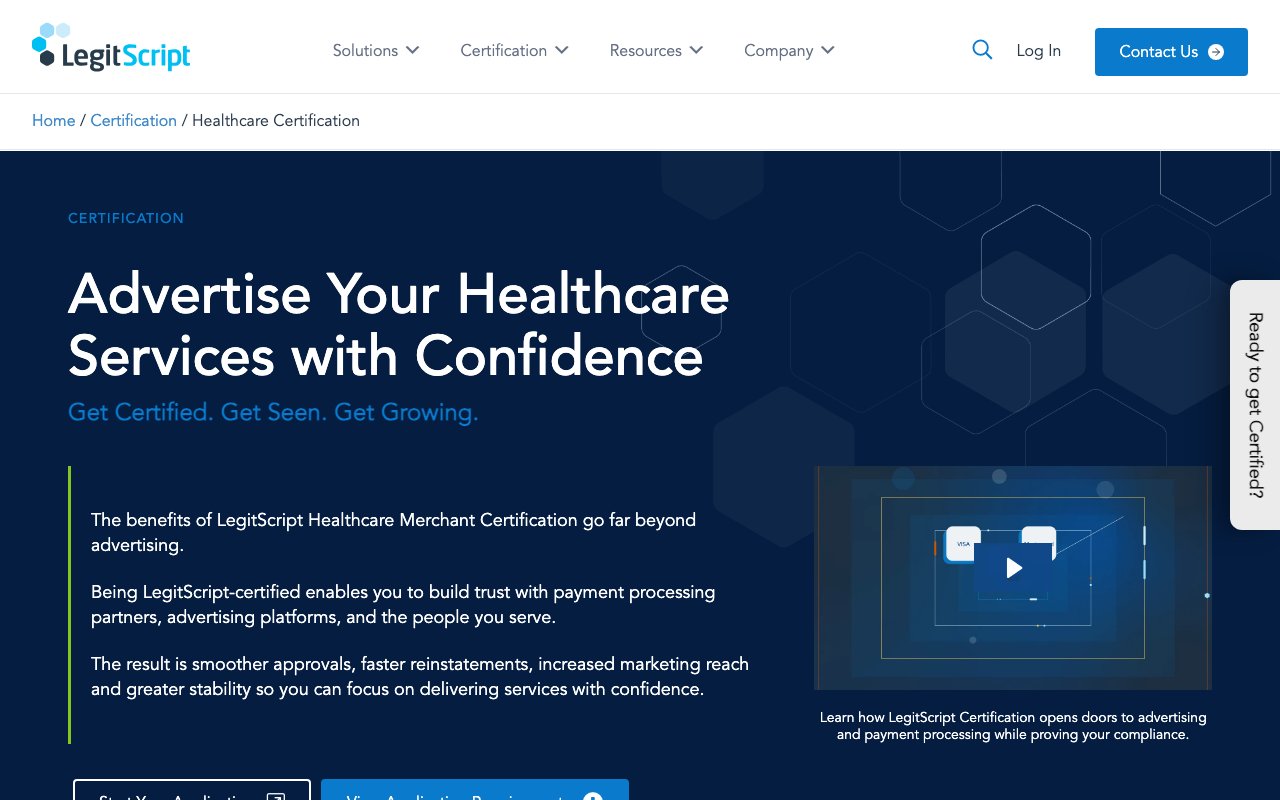
Google's restricted drug terms policy says that for some of its certifications "you may need to obtain third-party accreditation first (for example, from LegitScript, NABP, or G2)." That is the whole relationship in one sentence. Google decides which categories of advertiser must be certified; LegitScript is one of the accreditors Google accepts. LegitScript's own healthcare certification page describes the product as a way to "build trust with payment processing partners, advertising platforms, and the people you serve," and offers three doors: start an application, view the application requirements, and request a consultation.
2. Who Google says must certify: addiction services
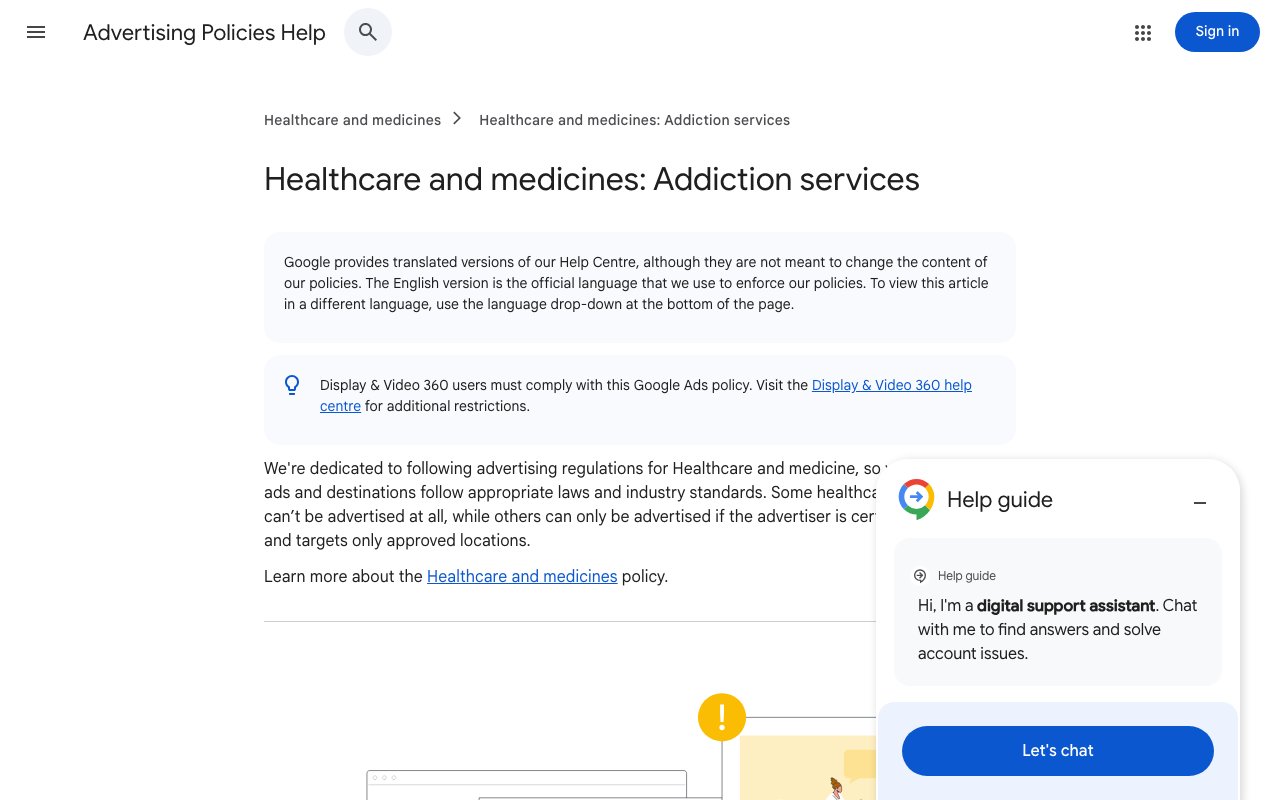
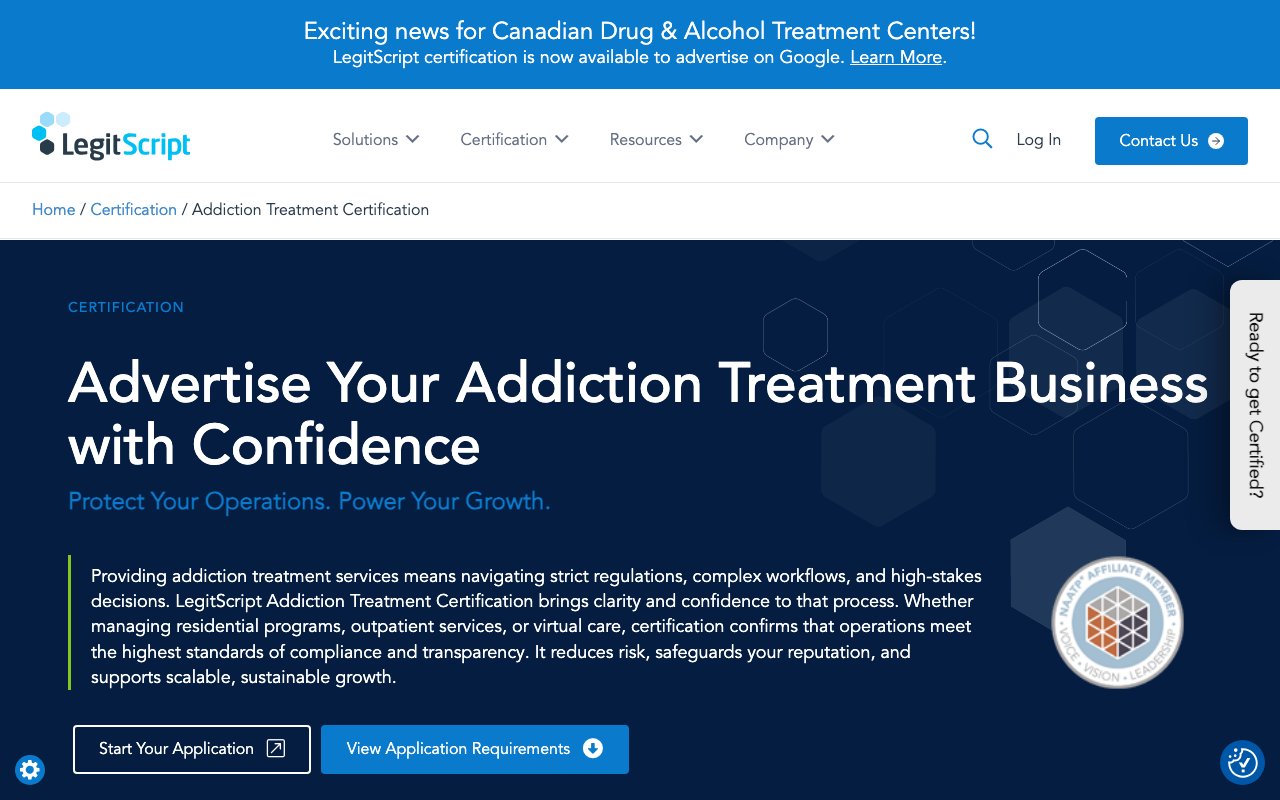
Google's addiction services policy restricts "the promotion of recovery-oriented drug and alcohol addiction services." Advertisers who are certified with Google for the location can promote those services in six places: Australia, Canada, France, Ireland, New Zealand and the United States. The same page limits its own scope: "Promotion of services unrelated to drug and alcohol addiction, like services for impulse control disorders, behavioural addiction or nicotine addiction, are out of scope of this policy." So a counselor who works with gambling, or with people quitting smoking, is not an addiction services advertiser by Google's wording. A practice that advertises treatment for alcohol or drug addiction is. LegitScript runs a separate addiction treatment certification for that category, which its page describes as covering residential programs, outpatient services and virtual care.
3. Who else: drug terms, pharmacies, telemedicine
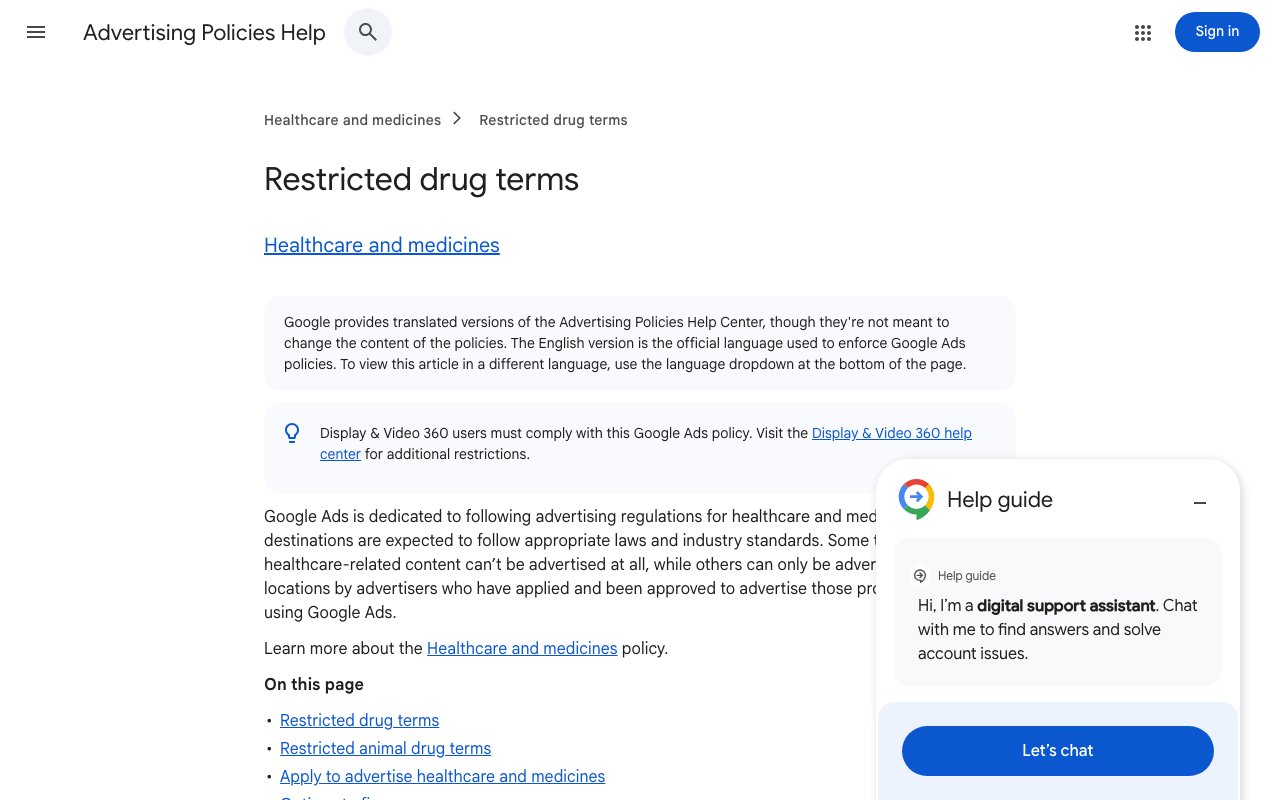
The restricted drug terms page splits the world in two. For campaigns targeting the United States, Canada or New Zealand: "While you don't need to be certified in order to use prescription drug terms in ads and landing pages, you must be certified in order to keyword-target these terms. Certification is also required for certain business types, like online pharmacies, telemedicine providers, and pharmaceutical manufacturers." For campaigns targeting anywhere else, prescription drug terms may not appear in ads or landing pages at all, apart from non-promotional uses such as regulatory warnings.
Read that twice, because it is the line most therapists misjudge. In Oregon you can name a medication on a page without certifying. The moment you bid on the medication's name as a keyword, you are in certification territory. And if your practice prescribes through telehealth, the "telemedicine providers" clause may apply to you regardless of keywords; that is a question for the application form, not for a marketing lesson.
4. Who does not need it
Google's healthcare application form asks what your organization is and offers seven answers: prescription drug services provider (online pharmacy, telemedicine), pharmaceutical manufacturer, governmental or well-established non-profit health advocacy organization, addiction services provider, health insurance advertiser (United States only), holder of an FDA license for a cell or gene therapy (United States only), and verified election advertiser. A counseling or therapy practice that does not prescribe and does not advertise drug or alcohol addiction treatment fits none of them. That is why I have never submitted the form for this directory's account, and why the prompt in Google Ads still sits there unclicked. How that account is set up is in Google Ads for a therapy practice.
5. Three cases that sit on the line
- You offer medication-assisted psychotherapy with a prescriber and want to advertise it. Naming the drug on the landing page is allowed in the United States; bidding on the drug name is not without certification. Decide which you need before you write the ad.
- You are a prescriber running telehealth appointments. The telemedicine clause is about business type, not keywords. Read it, and if in doubt, submit the form and let Google answer.
- You run a group practice with one clinician who treats substance use. If the ads promote that service, the addiction services policy applies to those ads, whatever the rest of the practice does.
6. What the process looks like, if you need it
- Read LegitScript's application requirements for your category, healthcare or addiction treatment. Both are linked from the healthcare certification page and the addiction treatment page.
- Check the current fee on LegitScript's site before you budget. There is an application fee and a separate annual fee; I am not repeating the figures because I could not confirm them against a live page.
- Submit the application with the documents the requirements list, from the Start Your Application button on either page.
- Once certified, complete Google's healthcare-related advertising form so the certification attaches to your Google Ads account for the locations you target.
- Keep it current. Google's addiction services page allows the ads only while the advertiser is certified for the location it targets.
This is my reading of Google's and LegitScript's public pages, not legal advice, and none of it replaces the application form's own questions. The attached checklist is the short version.
Sources
- “Restricted drug terms.” Google Advertising Policies Help. Names LegitScript, NABP and G2 as third-party accreditors; keyword-targeting rule. https://support.google.com/adspolicy/answer/15595717?hl=en (accessed Sep 24, 2026).
- “Healthcare and medicines: Addiction services.” Google Advertising Policies Help. Six countries; scope limited to drug and alcohol addiction. https://support.google.com/adspolicy/answer/15598649?hl=en-GB (accessed Sep 24, 2026).
- “Apply for healthcare-related advertising.” Google Ads Help. Organization types that must apply. https://support.google.com/google-ads/troubleshooter/6099627?hl=en (accessed Sep 24, 2026).
- “Healthcare Certification: Operate Safely Online.” LegitScript. Application, requirements and consultation entry points. Fees not quoted: not confirmed against a live page. https://www.legitscript.com/certification/healthcare-certification/ (accessed Sep 24, 2026).
- “Addiction Treatment Certification: Ads and Marketing.” LegitScript. Residential, outpatient and virtual care programs. https://www.legitscript.com/certification/addiction-treatment-certification/ (accessed Sep 24, 2026).
Documents
Templates and worksheets that go with this lesson.
Do I need LegitScript? Decision checklist