This lesson is for a therapist trying to decide how much to spend on marketing a private practice, and what that money should be expected to do. I traced the numbers that get repeated in this conversation back to the documents that contain them, and several turned out to be smaller, older, or less official than the blogs quoting them suggest. What is left is a handful of real figures, each with its sample size attached, one worked example labelled as arithmetic on a national median, and a short list of things to write down before you spend more.
1. Where "7 to 8 percent of revenue" comes from
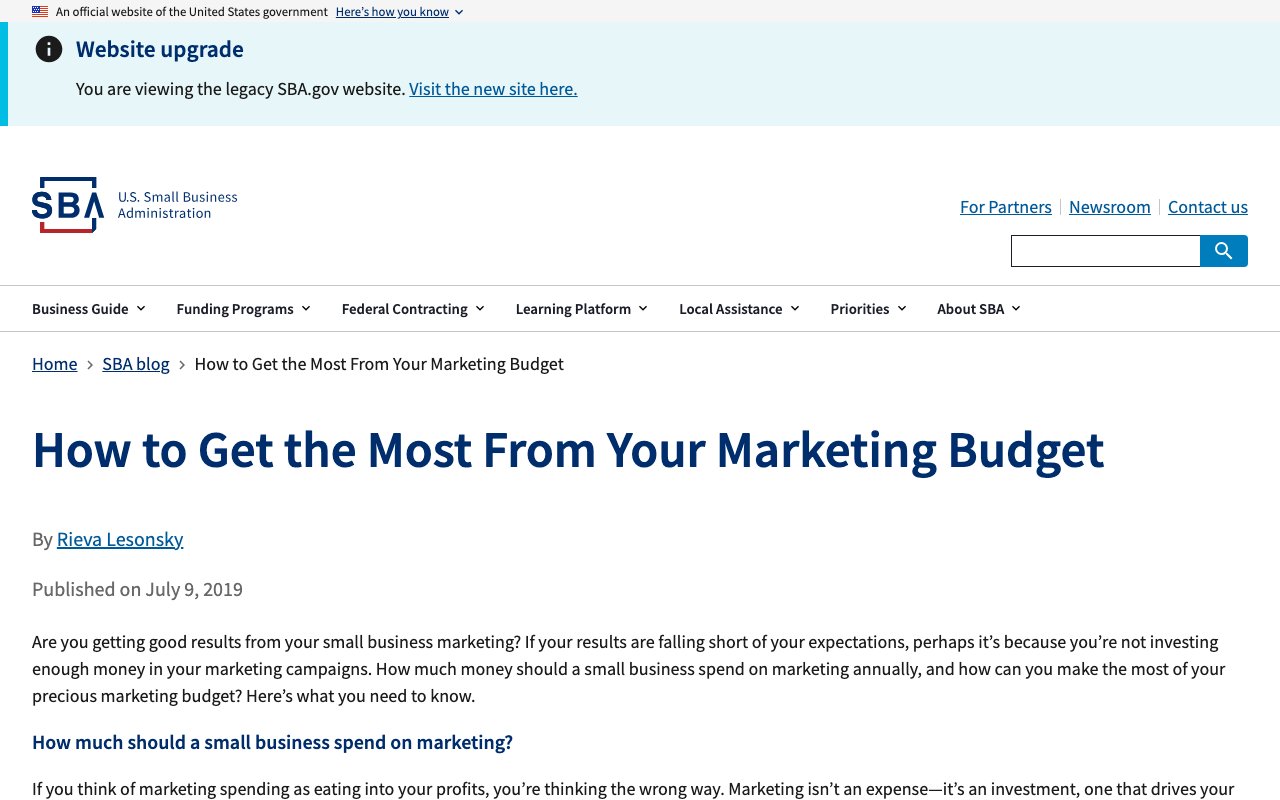
Hundreds of small-business articles say the SBA recommends spending 7 to 8 percent of revenue on marketing. The source is a July 9, 2019 SBA blog post, now archived on the agency's legacy subdomain. It does not issue that figure as policy. It cites Small Business Trends data putting the average at 1.08 percent of revenue, and a 2018 Web Strategies survey averaging 7.9 percent (6.3 percent for B2B products, 6.9 for B2B services, 9.6 for B2C products, 11.8 for B2C services). Its own conclusion: there is "no hard and fast answer." Treat any percentage rule as a starting range someone else made up for a different kind of business.
2. What large companies report, and why it does not transfer
The two surveys that get quoted most are built from companies nothing like a solo practice. Gartner's 2026 CMO Spend Survey reported marketing at 7.8 percent of revenue, from 401 chief marketing officers, most at companies with more than a billion dollars in revenue; Gartner's page blocked my automated fetch, so those figures come from search excerpts of its May 11, 2026 release, and you should open it yourself. The CMO Survey, run by Deloitte, Duke's Fuqua School and the American Marketing Association, fielded its 35th edition January 7 to 29, 2026 among 308 marketing leaders at US for-profit companies: 9.0 percent of revenue, the lowest share since 2021, with spending growth of 1.7 percent. The two disagree because they sample different populations. Together they say one useful thing: even well-funded companies have trimmed marketing's share since about 2021.

3. What therapists themselves report
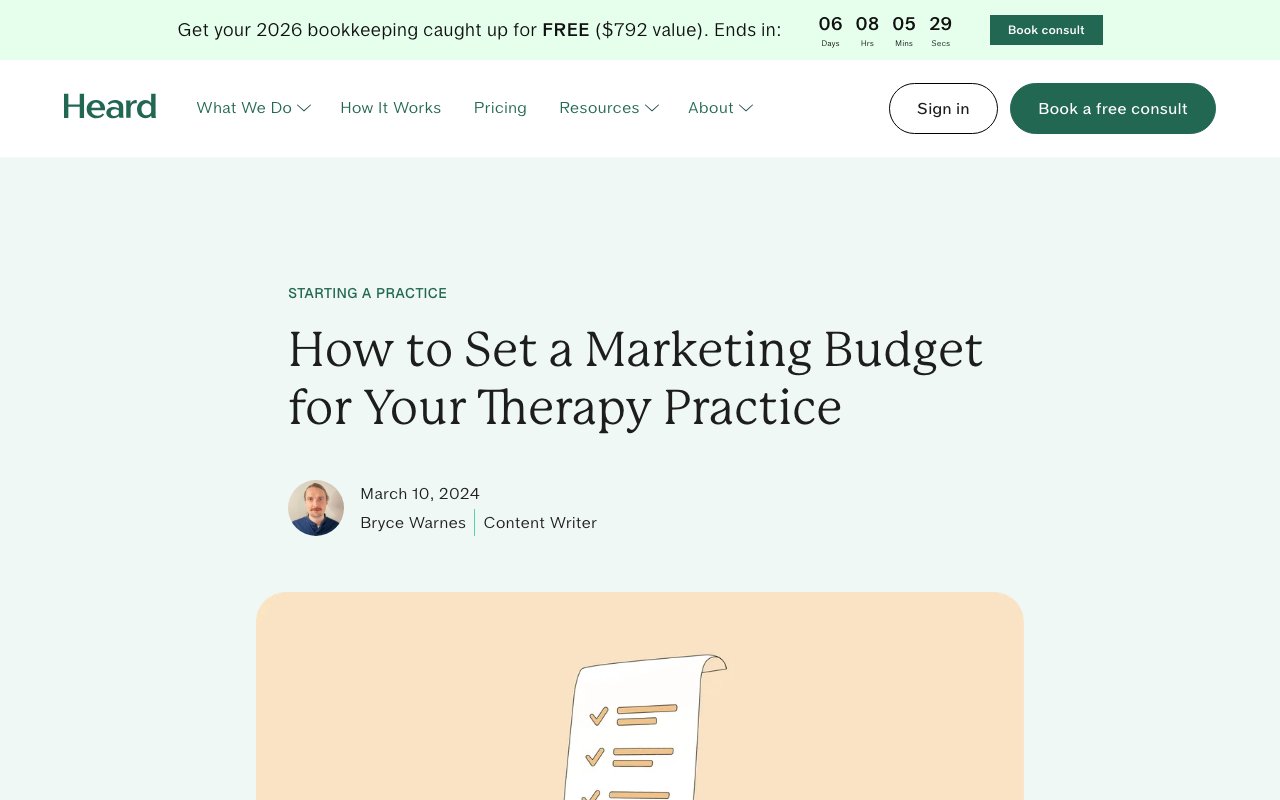
Heard's 2026 Financial State of Private Practice report, from a survey of nearly 2,000 therapists nationwide, puts median practice revenue at $80,412 for 2025, up from $68,222, with median expenses up 45 percent to $18,000 a year. The public landing page does not break out marketing; if the full report does, I have not read it. Heard's separate article on setting a marketing budget cites what it calls an unscientific poll of 73 therapists on social media, in which 79.5 percent said they spend under $100 a month. Seventy-three self-selected people is an anecdote, not a benchmark, and I present it as one. Heard's own advice is in dollars rather than percentages: most solo practices can run on less than $100 a month. Tebra's survey of independent practices (updated September 28, 2025) had 106 respondents, 94 percent of them physicians, so it is a physician survey rather than a therapy one: 62 percent spend 1 to 5 percent of gross revenue on marketing.
4. The free channel first
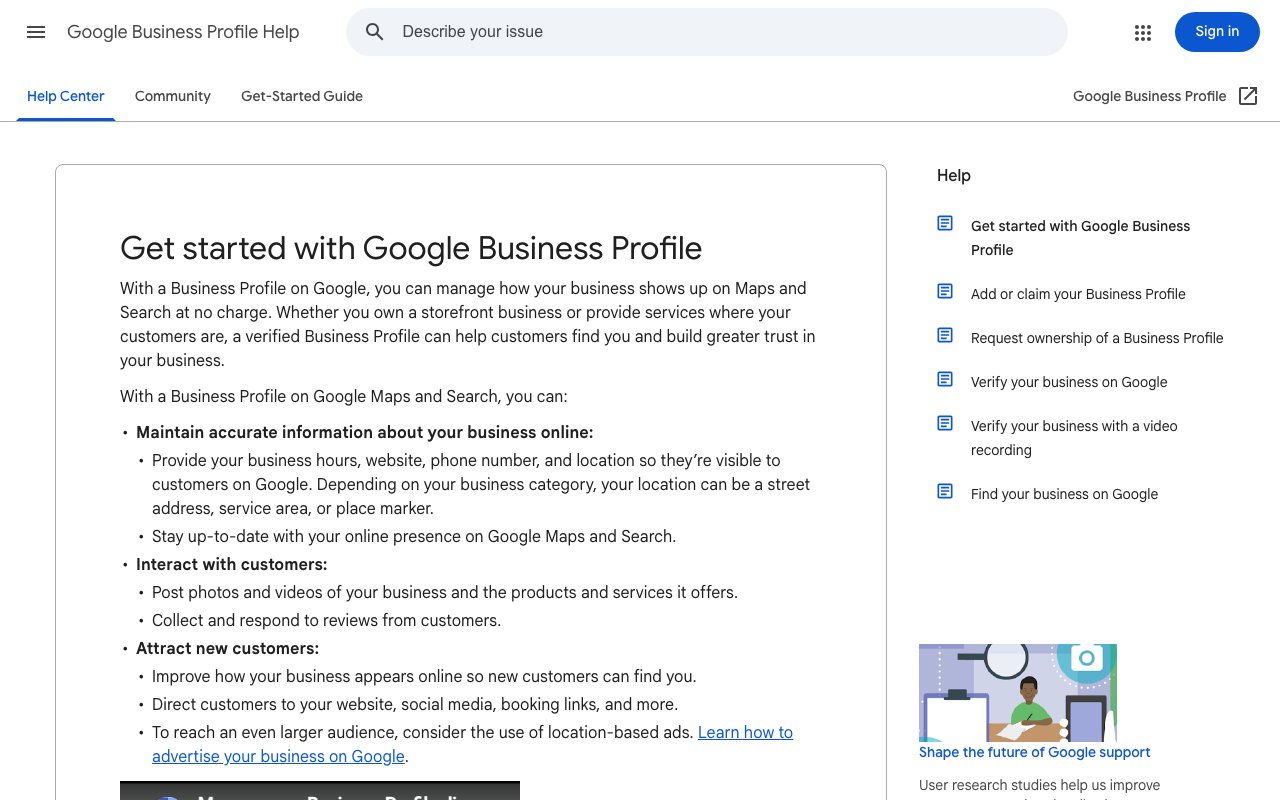
A Google Business Profile costs nothing to create and verify, and Google's getting-started page walks through it. Its local ranking page adds that "there's no way to request or pay for a better local ranking on Google," which means the free channel is not a lesser version of something you could buy. Do this before spending a dollar anywhere else; the steps are in local SEO for therapists.
5. What a listing costs, from the vendors' own pages
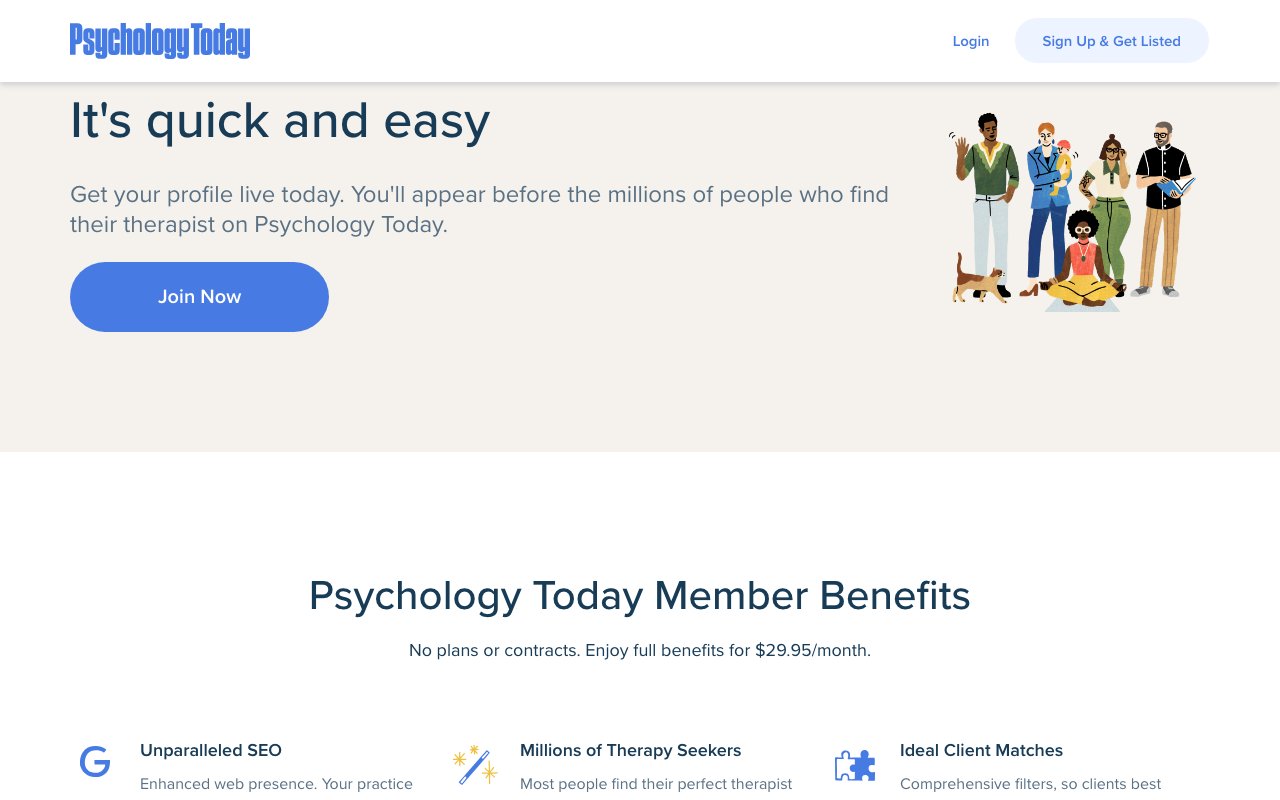
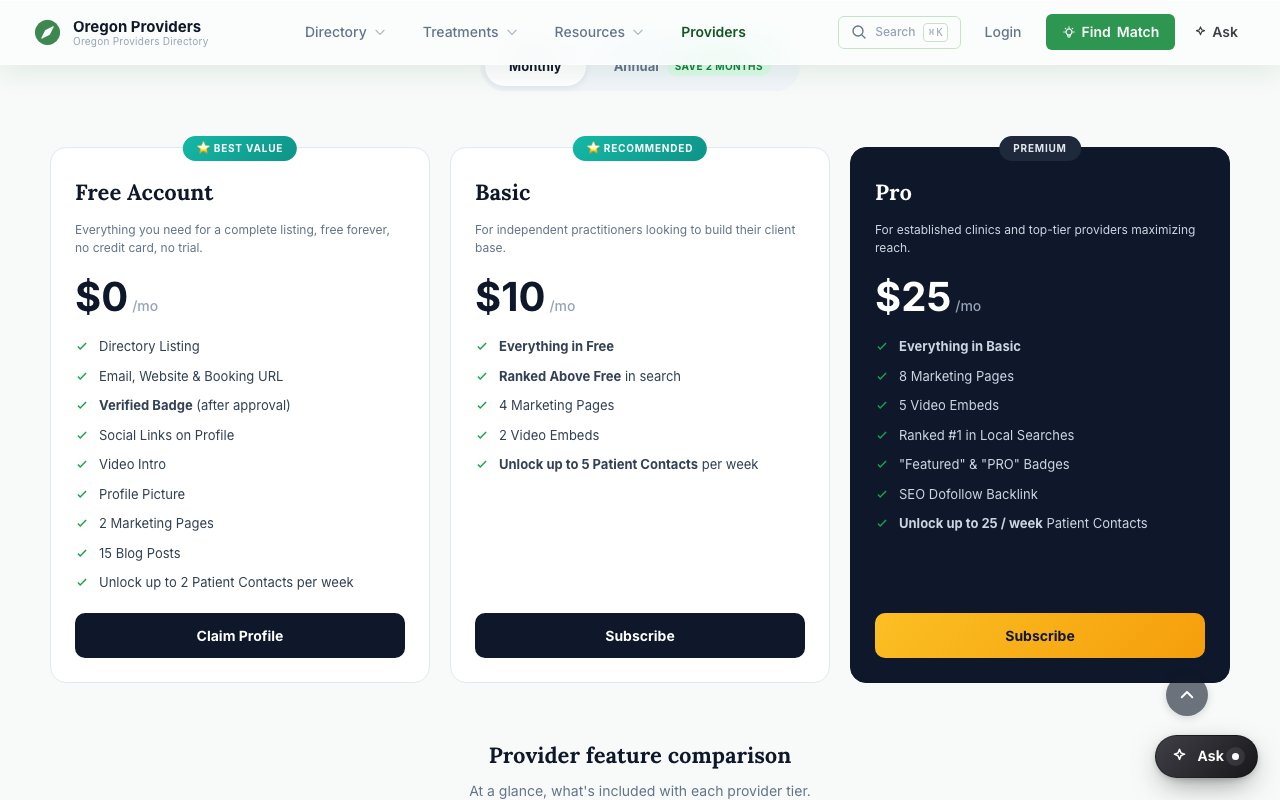
I only print prices I read on the seller's own page this month. Psychology Today's signup page says members pay a fixed monthly fee of $29.95, no long-term contract, cancel anytime: $359.40 a year. This directory's pricing page lists a free account at $0 with no credit card or trial, a verified badge tier (shown as Basic) at $10 a month or $100 a year, and a Pro tier at $25 a month or $250 a year; group plans run $35, $79 and $149 a month, or $348, $792 and $1,500 a year. Other directories' pages blocked my fetch or disagreed with each other, so I am not repeating their numbers. Get each one from its own site.
| Listing | Monthly | Yearly |
|---|---|---|
| Google Business Profile | $0 | $0 |
| Psychology Today | $29.95 | $359.40 |
| This directory, free account | $0 | $0 |
| This directory, verified badge (Basic) | $10 | $100 billed annually |
| This directory, Pro | $25 | $250 billed annually |
6. Google Ads without guessing
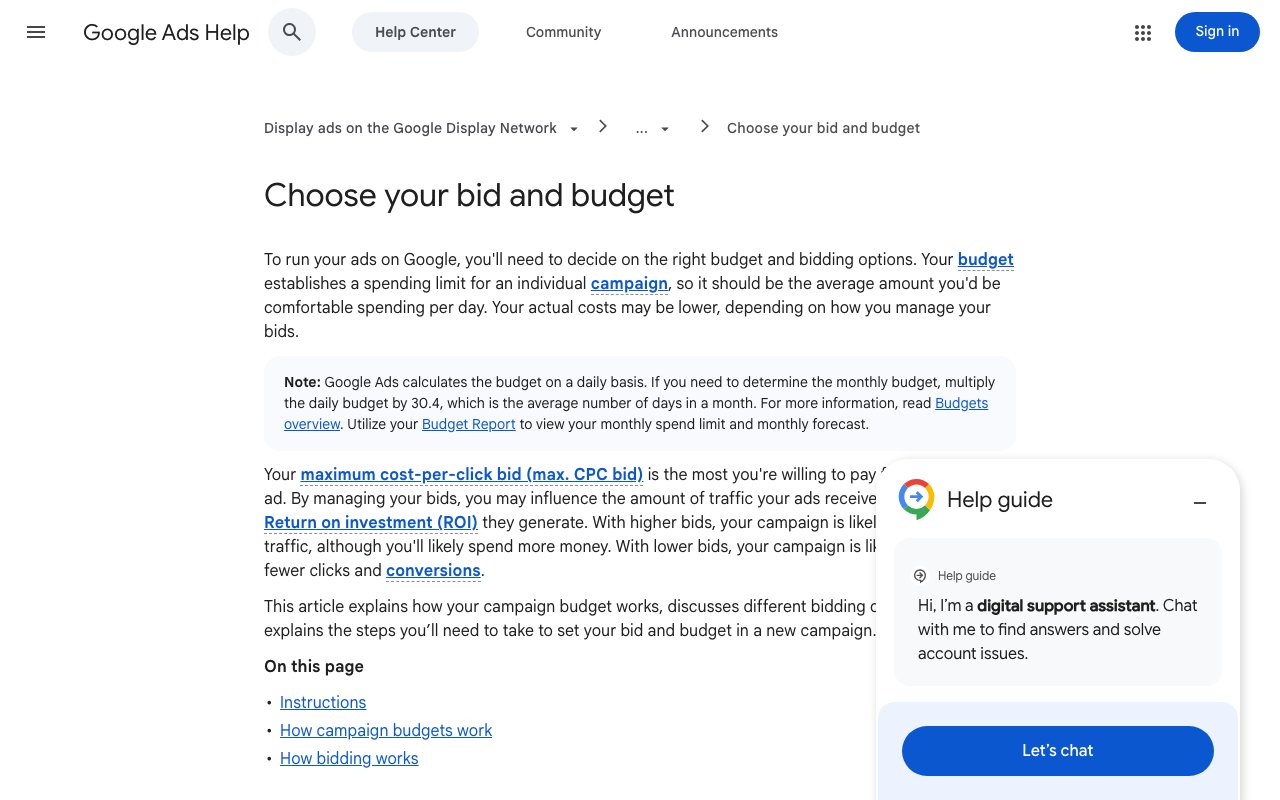
Google publishes no minimum daily budget for a standard Search campaign. Its help page on choosing a bid and budget describes the daily budget as something you set and change, with no floor stated. The "$5 to $10 a day for meaningful data" figure you will read is industry practice, not Google's number. One narrow exception: as of April 1, 2026, the Ads API enforces a $5 a day minimum for Demand Gen campaigns, a different automated format. For what it is worth, I run two Search campaigns for this directory at about $22 a day combined; that is my own account, unaudited and still being measured, so it is color, not a benchmark. Pick a daily figure you could sustain for 90 days before you start.
7. A worked example, labelled
This is arithmetic on the figures above, not a new data point, and the revenue figure is a national median across all states; I found no primary source for Oregon-specific session fees or practice revenue. Take Heard's 2025 median revenue of $80,412 as a stand-in for a modest, established solo practice. At the low end of Tebra's 1 to 5 percent range, about 3 percent, that is roughly $2,400 a year, or $200 a month.
| Line | Yearly | Basis |
|---|---|---|
| Google Business Profile | $0 | Free, Google's page |
| Psychology Today listing | $359.40 | $29.95 a month, its signup page |
| This directory, verified badge | $100 | Annual price, pricing page |
| Left for a sustained ads test, a photo refresh, or savings | about $1,940 | Remainder of $2,400 |
If your revenue is half that median, halve the total and drop a line rather than spreading $100 a month across everything.
8. What to track before spending more
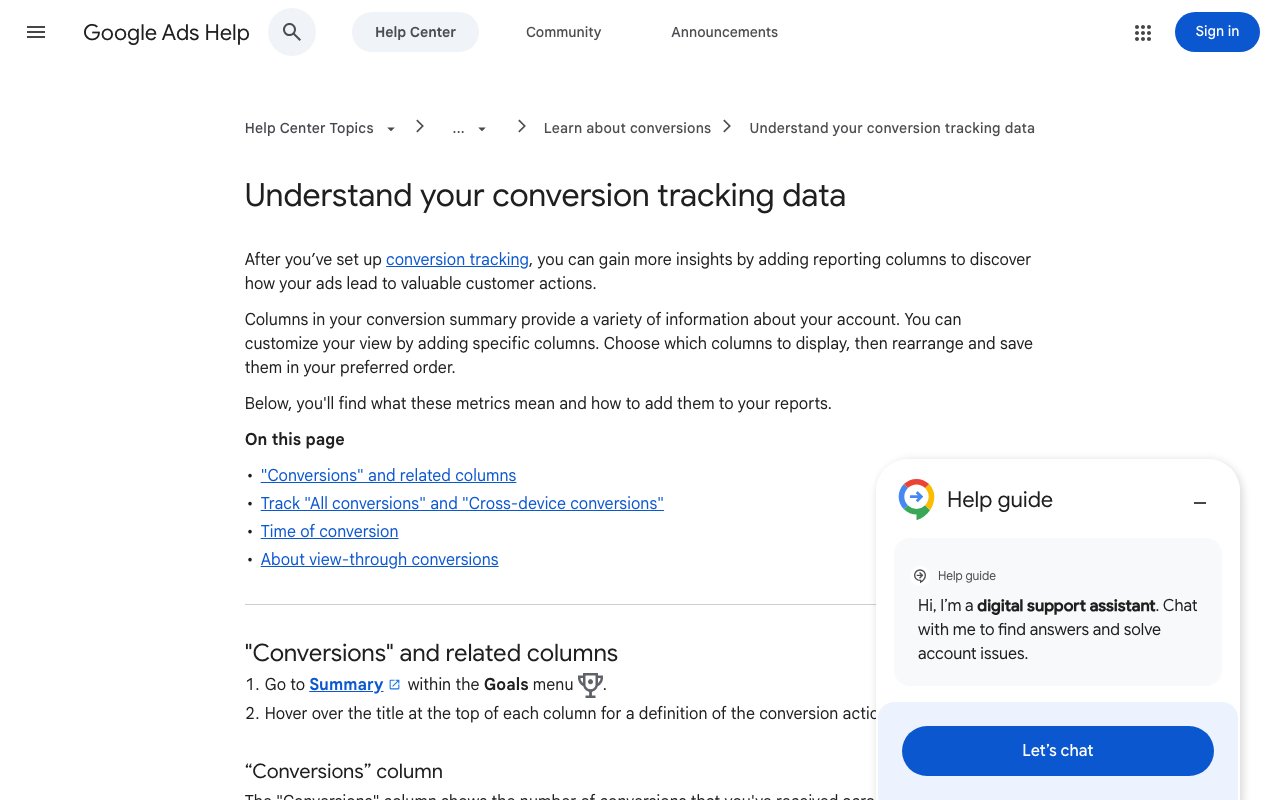
Write down what each channel cost and what it produced: not clicks, but new clients who booked. Google's help page on reading conversion tracking data is where that starts for ads; for a directory, it is the profile's own contact count or a question you ask every new client. Revisit the budget after 90 days of real numbers, not projections, and before tax season makes you reconstruct it.
These are cited figures and my own practice's habits, not financial advice; a CPA gets the final word on what you can deduct.
Sources
- “How to get the most from your marketing budget.” U.S. Small Business Administration (archived blog), Jul 9, 2019. Cites Small Business Trends and a 2018 Web Strategies survey; concludes there is no hard and fast answer. https://legacy.sba.gov/blog/how-get-most-your-marketing-budget (accessed Sep 24, 2026).
- “Marketing contracts under economic pressure despite growing value and AI gains.” The CMO Survey, Mar 31, 2026. 35th edition, 308 marketing leaders, fielded January 7 to 29, 2026. https://cmosurvey.org/marketing-contracts-under-economic-pressure-despite-growing-value-and-ai-gains/ (accessed Sep 24, 2026).
- “The Heard 2026 Financial State of Private Practice report.” Heard. Landing page only; the full report was not read. https://www.joinheard.com/resources/downloads/the-heard-2026-financial-state-of-private-practice-report (accessed Sep 24, 2026).
- “How to set a marketing budget for your therapy practice.” Heard, Mar 10, 2024. Includes an unscientific poll of 73 therapists; treated as an anecdote. https://www.joinheard.com/articles/how-to-set-a-marketing-budget-for-your-therapy-practice (accessed Sep 24, 2026).
- “Survey reveals healthcare marketing budget benchmarks for independent practices.” Tebra, The Intake, Sep 28, 2025. 106 respondents, 94 percent physicians; not therapy-specific. https://www.tebra.com/theintake/medical-deep-dives/get-new-patients/survey-reveals-healthcare-marketing-budget-benchmarks-for-independent-practices (accessed Sep 24, 2026).
- “Get started with Google Business Profile.” Google Business Profile Help. No revision date shown. https://support.google.com/business/answer/7039811?hl=en (accessed Sep 24, 2026).
- “Tips to improve your local ranking on Google.” Google Business Profile Help. No revision date shown. https://support.google.com/business/answer/7091?hl=en (accessed Sep 24, 2026).
- “Join Psychology Today.” Psychology Today. Fee of $29.95 a month read from the page on the access date. https://join.psychologytoday.com/us/signup (accessed Sep 24, 2026).
- “Plans and pricing.” Oregon Counselors. Tier prices read from the live page on the access date. https://orcounselors.com/pricing (accessed Sep 24, 2026).
- “Choose your bid and budget.” Google Ads Help. No revision date shown. https://support.google.com/google-ads/answer/2375454?hl=en (accessed Sep 24, 2026).
- “Understand your conversion tracking data.” Google Ads Help. No revision date shown. https://support.google.com/google-ads/answer/6270625?hl=en (accessed Sep 24, 2026).
Documents
Templates and worksheets that go with this lesson.
Marketing budget checklist