Skip to content

Therapy approaches

Cognitive Behavioral (CBT) Therapists in Oregon

Find Oregon therapists who practice Cognitive Behavioral (CBT).

Cognitive Behavioral Therapy (CBT) is the most-researched form of psychotherapy in the world — the gold standard for anxiety, depression, OCD, panic disorder, insomnia, and many trauma presentations. As of April 2026, hundreds of therapists listed on Oregon Counselors on this directory practice CBT. Many offer telehealth (CBT translates well to virtual format), many accept Oregon Health Plan, many offer sliding-scale fees. CBT is structured, time-limited, and focused on the present — most clients see meaningful change in 12–20 weekly sessions. The work targets the specific thoughts, behaviors, and physical patterns that maintain distress, rather than excavating childhood. CBT branches include Cognitive Processing Therapy (CPT) for trauma, Exposure-and-Response Prevention (ERP) for OCD, Behavioral Activation for depression, and CBT-I for insomnia.

5,845
providers listed
Licensed
& verified
Telehealth
options
OHP & insurance
accepted

Filters

Therapy for

Options

5,845 providers found

Cognitive Behavioral (CBT) also matches related specialties: Behavioral Issues, Cognitive Processing (CPT), CBT, Inference Based CBT (ICBT). Results below include all of them.

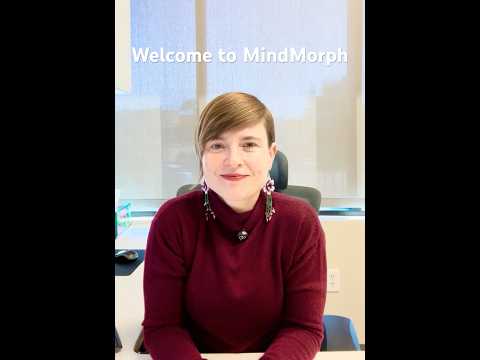
  1. Maria (Masha) Steiner-Renoir / MindMorph LLC Prescriber

    PMHNP, FNPPortland, ORIn-person & Telehealth

    • Video intro
    • Speaks Russian, Я говорю по-русски
    Cognitive Behavioral (CBT)

    Accepting new patients across Oregon! Are you an adult in Portland or anywhere in Oregon seeking psychedelic-informed, trauma-focused psychiatric care via telehealth? I specialize in complex PTSD, anxiety, and…

    Accepting Verified

    Book

Video Introductions

Meet these providers before you reach out.

Maria (Masha) Steiner-Renoir / MindMorph LLC PMHNP, FNP · Portland, OR
Bradley Raburn MA, ID-LCPC, OR-LPC · Bend, OR
Steven Ponec Professional Counselor Associate · Portland, OR
Mackenzie Phelps LPC · Portland, OR
Shane Knox LMFT · Eugene, OR
Humanistic Therapy NW CSWA, LPC-A, LMFT-A · Portland, OR

Related Articles

From Oregon providers writing about this topic.

Oregon's July 2027 Rule for Associates Billing Medicaid: What Outpatient Programs Should Fix Now

Oregon's July 2027 Rule for Associates Billing Medicaid: What Outpatient Programs Should Fix Now

Oregon outpatient programs that rely on board-registered associates for Medicaid work have a hard date on the calendar. Permanent Administrative Order BHS 18-2026, filed June 30, 2026 and effective July 1, 2026, amended OAR 309-019-0125 and OAR 309-019-0130. The filing caption is blunt: board-registered associates must work in organizations with…

Saint Health Group
Rest as Resistance: Saying No to Grind Culture with Your Whole Body

Rest as Resistance: Saying No to Grind Culture with Your Whole Body

Learn more in Episode 12 of The Inked Therapist Podcast Rest is not laziness, a luxury, or a prize you earn for being productive enough. Rest is a practice of refusal in a world that treats human beings—especially Black, brown, disabled, queer, trans, fat, and poor folks—as resources to be…

Del Knight / Soma Roots Therapy
Complex Trauma vs PTSD: Understanding the Difference, and Why It Matters

Complex Trauma vs PTSD: Understanding the Difference, and Why It Matters

When people think of trauma, they often imagine one defining event, a car accident, assault, or natural disaster. That’s the kind of experience typically associated with Post-Traumatic Stress Disorder (PTSD). But what happens when trauma isn’t one moment in time, but a long thread that weaves through your childhood, relationships…

Jennifer Starlight Rojas
What Belongs in an Oregon Plan of Correction After an OHA Behavioral Health Review

What Belongs in an Oregon Plan of Correction After an OHA Behavioral Health Review

Most Oregon outpatient programs treat a Plan of Correction as a paperwork chore after a hard review week. That is the wrong frame. Under OAR 309-008-0800, the Division can deny, revoke, refuse to renew, or put conditions on your Certificate of Approval if the POC is late or thin. The…

Saint Health Group
I Made My Therapist Cry

I Made My Therapist Cry

When I was training to become a therapist (what feels like a million years ago), I was taught to do whatever I could to remain “neutral looking” in session with a client. I was told that any distress I felt or showed could negatively impact the person or people sitting…

Robyn Cullen
Good Faith Estimates for Self-Pay Clients: What Oregon Behavioral Health Practices Still Get Wrong

Good Faith Estimates for Self-Pay Clients: What Oregon Behavioral Health Practices Still Get Wrong

The federal Good Faith Estimate rule has applied since January 1, 2022. If your practice or SUD program sees self-pay clients, you probably have a GFE form in the intake packet. The problems sit in the details: who gets one, how fast, what goes on it, and when it has…

Saint Health Group
View all resources →

Cognitive Behavioral (CBT) — key facts & evidence

Researched data on this topic, every figure links to its source.

Oregon

The Oregon Health Plan covers behavioral health services, including treatment for mental health, substance use, and problem gambling, and no referral from a primary care provider is required.

Source: Oregon Health Authority (Oregon.gov)

Frequently asked questions

Common questions about this coverage in Oregon.

What does a CBT session actually look like?
A typical CBT session has a clear structure: you set an agenda in the first few minutes, review homework from the previous week, work on one or two specific issues using a thought record or behavioral experiment, and agree on practice for the next week. Sessions are usually 50 minutes, mostly active conversation, and you'll leave with concrete tools (often worksheets) to practice between sessions.
How long does CBT therapy take?
CBT is short-term by design. Standard protocols run 12–20 weekly sessions, and most clients see meaningful change by session 6–8. Anxiety disorders often resolve in 8–12 sessions; depression in 16–20; OCD with ERP often in 12–16. CBT isn't open-ended — your therapist will set goals in the first 1–2 sessions and check progress every 4–6 weeks. If you're not seeing change after 8 sessions, that's a sign to talk with your therapist about adjusting the approach.
What's the difference between CBT and DBT?
CBT focuses on identifying and changing the thoughts and behaviors that maintain a problem (anxiety, depression, OCD, panic). DBT (Dialectical Behavior Therapy) is a CBT offshoot developed for chronic suicidality, BPD, and emotion-dysregulation patterns — it adds specific skills modules for mindfulness, distress tolerance, emotion regulation, and interpersonal effectiveness, usually delivered in both individual sessions and weekly skills groups. For straightforward anxiety or depression, CBT is the more efficient fit; for emotion-dysregulation patterns, DBT.
Can CBT be done online or via telehealth?
Yes — CBT is the modality with the most research support for telehealth delivery. Outcomes for online CBT are comparable to in-person across anxiety, depression, OCD, and PTSD. The structured nature of CBT (worksheets, homework, clear agendas) actually translates well to video sessions — sometimes better than less-structured therapies.
Is CBT good for both depression and anxiety?
Yes — CBT is the first-line evidence-based treatment for both, and especially when they co-occur (which is common). The same therapist using the same general framework can address both, though specific protocols differ slightly: cognitive restructuring is more central for depression, while behavioral exposure is more central for anxiety. About half of clients on this directory have CBT in combination with at least one other modality (often EMDR, IFS, or mindfulness-based work) for cases that need additional depth.
Will my insurance cover CBT in Oregon?
Yes. Most also accept Kaiser, Moda, Providence, Regence, BlueCross, Cigna, Aetna, and PacificSource.
Is CBT just "thinking positive"?
No — that's a common misconception. CBT doesn't ask you to talk yourself into believing things you don't. It teaches you to notice the automatic interpretations your mind generates under stress, evaluate whether they're accurate or distorted, and respond more deliberately. The goal is realistic thinking, not positive thinking. CBT also has a behavioral arm — exposure work, behavioral activation, sleep restriction for insomnia — that often does more of the heavy lifting than the cognitive piece.
Does CBT work for trauma, or do I need EMDR?
CBT works well for trauma — specifically Cognitive Processing Therapy (CPT) and Trauma-Focused CBT have strong evidence and are first-line VA treatments for PTSD. EMDR has comparable outcomes through different mechanisms. Most Oregon trauma therapists offer at least one of these and will help you choose based on what your nervous system tolerates. Some clients do better with the structured cognitive work of CPT; others find EMDR's bilateral stimulation more accessible. Both are options.
Do I have homework in CBT?
Yes — and it's a key reason CBT works as fast as it does. Between-session work usually includes thought records (catching automatic thoughts and examining them), behavioral experiments (testing predictions you've been avoiding), exposure exercises, mood tracking, or sleep logs. The homework is the active ingredient; people who do it consistently see roughly twice the symptom reduction of people who don't. If homework feels like school, your therapist can help adjust the format.
How many Oregon therapists specialize in Cognitive Behavioral Therapy (CBT)?
there are hundreds of therapists specializing in Cognitive Behavioral Therapy (CBT). This widespread availability allows residents across Oregon to access this evidence-based approach to therapy.
Do Oregon CBT therapists accept OHP / Oregon Health Plan?
Yes, many therapists specializing in CBT in Oregon accept the Oregon Health Plan (OHP). This can provide eligible clients with access to CBT sessions at reduced or no cost, depending on their specific OHP coverage.
Is telehealth available for CBT in Oregon?
Yes, many CBT therapists offer telehealth services, allowing clients to engage in therapy sessions remotely, which can be particularly beneficial for those in rural areas or with mobility constraints.
Do Oregon CBT therapists offer sliding scale fees?
Yes, many CBT therapists offer sliding scale fees, which can make therapy more accessible for clients with financial limitations or those without insurance. This flexibility can help ensure that cost does not become a barrier to receiving therapy.

Oregon Counselors Directory features hundreds of therapists listed on Oregon Counselors specializing in Cognitive Behavioral Therapy (CBT) across Oregon. This approach is recognized for its structured, time-limited, and goal-oriented nature. With many providers offering telehealth, individuals in both rural and urban areas of Oregon can access CBT services from home. Many therapists accept the Oregon Health Plan (OHP), which may cover sessions at little or no cost to eligible clients. Many therapists offer sliding scale fees, accommodating clients with financial constraints or without insurance.