Lara Welford
Bipolar Disorder
Community listing from public records, not yet authored by the provider.
Find care in Oregon
Results appear as you type. Press Enter for all results, use the arrow keys to pick one, or ask a question for an answer from the verified directory.
Specialties
Find Oregon therapists specializing in Bipolar Disorder.
As of April 2026, many therapists listed on Oregon Counselors specialize in Bipolar Disorder. Many providers offer telehealth sessions, which can be particularly beneficial for individuals in remote areas or those who prefer the convenience of online care. Of these, many accept Oregon Health Plan (OHP), providing affordable therapy options for those with Medicaid coverage. Many therapists offer sliding scale fees, ensuring access to therapy for clients with lower incomes. Evidence-based approaches such as Cognitive Behavioral Therapy (CBT), Dialectical Behavior Therapy (DBT), and Psychoeducation are commonly used to treat Bipolar Disorder.
Enter a city to search within ~30 miles, telehealth therapists are shown statewide.
413 providers found
Bipolar Disorder also matches related terms: Bipolar. Results below include all of them.
Community listing from public records, not yet authored by the provider.
Community listing from public records, not yet authored by the provider.
Community listing from public records, not yet authored by the provider.
Community listing from public records, not yet authored by the provider.
Unclaimed
Community listing from public records, not yet authored by the provider.
Unclaimed
Fewer than 3 providers match this specialty directly. These licensed Oregon telehealth providers may also be able to help.


MDPortland, ORTelehealth

MDBeaverton, ORIn-person & Telehealth


CSWA, LPC-A, LMFT-APortland, ORIn-person & Telehealth


CSWA, MSW, QMHP-R, CADCR-RPortland, ORIn-person & Telehealth

LPC, LMFTRedmond, ORIn-person & Telehealth

LPC, LMHC, SUDPPortland, ORIn-person & Telehealth

MA, LPC, NCC, CADC IIEugene, ORIn-person & Telehealth
Meet these providers before you reach out.

 BR
Bradley Raburn
MA, ID-LCPC, OR-LPC · Bend, OR
BR
Bradley Raburn
MA, ID-LCPC, OR-LPC · Bend, OR

 HT
Humanistic Therapy NW
CSWA, LPC-A, LMFT-A · Portland, OR
HT
Humanistic Therapy NW
CSWA, LPC-A, LMFT-A · Portland, OR
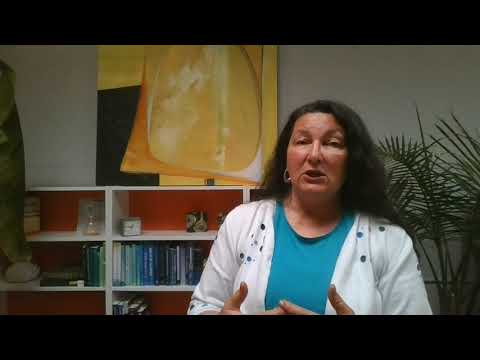
 KM
Kate McNulty
LCSW · Portland, OR
KM
Kate McNulty
LCSW · Portland, OR

 HT
Healing Power Therapy LLC
CSWA, MSW, QMHP-R, CADCR-R · Portland, OR
HT
Healing Power Therapy LLC
CSWA, MSW, QMHP-R, CADCR-R · Portland, OR
From Oregon providers writing about this topic.

Learn more in Episode 12 of The Inked Therapist Podcast Rest is not laziness, a luxury, or a prize you earn for being productive enough. Rest is a practice of refusal in a world that treats human beings—especially Black, brown, disabled, queer, trans, fat, and poor folks—as resources to be…

When people think of trauma, they often imagine one defining event, a car accident, assault, or natural disaster. That’s the kind of experience typically associated with Post-Traumatic Stress Disorder (PTSD). But what happens when trauma isn’t one moment in time, but a long thread that weaves through your childhood, relationships…

Most Oregon outpatient programs treat a Plan of Correction as a paperwork chore after a hard review week. That is the wrong frame. Under OAR 309-008-0800, the Division can deny, revoke, refuse to renew, or put conditions on your Certificate of Approval if the POC is late or thin. The…

When I was training to become a therapist (what feels like a million years ago), I was taught to do whatever I could to remain “neutral looking” in session with a client. I was told that any distress I felt or showed could negatively impact the person or people sitting…

The federal Good Faith Estimate rule has applied since January 1, 2022. If your practice or SUD program sees self-pay clients, you probably have a GFE form in the intake packet. The problems sit in the details: who gets one, how fast, what goes on it, and when it has…

You may know logically that you are safe, yet your body seems to disagree. Perhaps you have difficulty relaxing, become overwhelmed during conflict, constantly anticipate what could go wrong, or notice yourself reacting strongly to situations that other people seem able to brush off. You might experience racing thoughts, irritability…
Researched data on this topic, every figure links to its source.
U.S.
An estimated 2.8% of U.S. adults had bipolar disorder in the past year and 4.4% experience it in their lifetime; rates are similar for men and women (NIMH).
Source: NIMH (2017)U.S.
Among U.S. adults with past-year bipolar disorder, an estimated 82.9% had serious impairment — the highest share of serious impairment among all mood disorders (NIMH).
Source: NIMH (2017)U.S.
Bipolar disorder is often missed early: a 2016 meta-analysis of 9,415 patients found an average delay of almost six years between symptom onset and diagnosis (Canadian Journal of Psychiatry).
Source: Canadian Journal of Psychiatry (2016)U.S.
Per the DBSA, people with bipolar disorder can face up to ten years coping with symptoms before an accurate diagnosis, with only about one in four diagnosed correctly within three years.
Source: Depression and Bipolar Support Alliance (2000)U.S.
A 2019 meta-analysis of 79 studies (33,719 people) found the lifetime prevalence of suicide attempts in bipolar disorder was 33.9% (Epidemiology and Psychiatric Sciences).
Source: Epidemiology and Psychiatric Sciences (2019)Oregon
Oregon has the highest rate of mental illness of any U.S. state — 30% of adults versus 23% nationally — underscoring high demand for mood-disorder care (Mental Health America 2025 report).
Source: Mental Health America (2025 report) (2025)Common questions about this coverage in Oregon.
Many therapists listed on Oregon Counselors specialize in Bipolar Disorder. Many providers offer telehealth sessions, which can be particularly beneficial for individuals in remote areas or those who prefer the convenience of online care. Of these, many accept Oregon Health Plan (OHP), providing affordable therapy options for those with Medicaid coverage. Many therapists offer sliding scale fees, ensuring access to therapy for clients with lower incomes. Evidence-based approaches such as Cognitive Behavioral Therapy (CBT), Dialectical Behavior Therapy (DBT), and Psychoeducation are commonly used to treat Bipolar Disorder.
Ask the directory
Full pageTell me what you need.
Describe who you are looking for, in plain words. Automated, not a therapist.