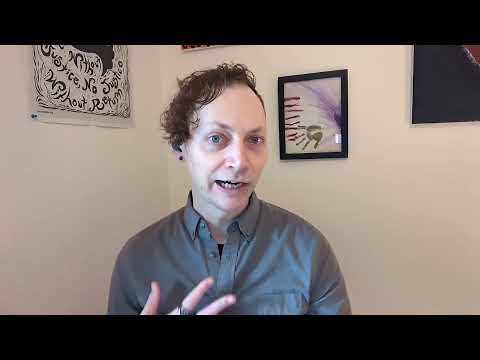
1.Redmond Reams
Portland, OR, Portland, OR 97212
Grief · Obsessive-Compulsive (OCD) · Trauma and PTSD
orcounselors.com/provider/redmond-reams-portland-or
1,938 providers found
Anxiety is the most common mental health condition in Oregon, affecting roughly 1 in 5 adults. Oregon therapists who specialize in anxiety use evidence-based approaches like CBT, exposure therapy, and mindfulness to help you manage worry, panic attacks, and generalized anxiety disorder.
As of April 2026, Oregon Counselor Directory lists 1,938 Oregon therapists who specialize in anxiety, panic disorder, social anxiety, and related conditions. Of those, 908 offer telehealth so you can be matched with someone outside your immediate area; 333 accept Oregon Health Plan (OHP); 65 offer sliding-scale fees for clients who are uninsured or out-of-network; and 293 are currently accepting new clients. The directory's anxiety specialists draw from evidence-based approaches including Cognitive Behavioral Therapy (CBT), Acceptance and Commitment Therapy (ACT), Eye Movement Desensitization and Reprocessing (EMDR) when anxiety is rooted in a specific traumatic event, exposure-and-response prevention (ERP) for OCD-spectrum anxiety, and somatic / mindfulness-based work for the body component. You can filter by city, insurance, modality, sliding scale, telehealth, and current availability — and most therapists offer a free 15-minute consultation so you can find the right fit before committing.
Enter a city to search within ~30 miles, telehealth therapists are shown statewide.
Showing the first 8 of 1,938 results.
Portland, OR, Portland, OR 97212
Grief · Obsessive-Compulsive (OCD) · Trauma and PTSD
In-person
orcounselors.com/provider/redmond-reams-portland-or
Newberg, OR, Newberg, OR 97132
ADHD · Grief · Obsessive-Compulsive (OCD)
In-person
orcounselors.com/provider/rhonda-andrews-newberg-or
Portland, OR, Portland, OR 97214
Grief · LGBTQ+ · Obsessive-Compulsive (OCD)
In-person
orcounselors.com/provider/riley-shaffer-portland-or
Portland, OR, Portland, OR 97215
Grief · Obsessive-Compulsive (OCD) · Trauma and PTSD
In-person & Telehealth
orcounselors.com/provider/robin-kellett-llc-portland-or
Medford, OR, Medford, OR 97501
Grief · LGBTQ+ · Obsessive-Compulsive (OCD)
In-person & Telehealth
orcounselors.com/provider/rogue-holistic-therapy-medford-or
Online Only
Grief · Obsessive-Compulsive (OCD) · Trauma and PTSD
Telehealth
orcounselors.com/provider/rosimery-bergeron-or
Salem, OR, Salem, OR 97304
ADHD · LGBTQ+ · Obsessive-Compulsive (OCD)
In-person
orcounselors.com/provider/roxanne-n-crossley-salem-or
Online Only
Grief · Obsessive-Compulsive (OCD) · Trauma and PTSD
Telehealth
orcounselors.com/provider/rummy-rodriguez-anchia-or
Portland, ORIn-person
Community listing from public records, not yet authored by the provider.

Newberg, ORIn-person
Community listing from public records, not yet authored by the provider.
Portland, ORIn-person
Community listing from public records, not yet authored by the provider.
LPCPortland, ORIn-person & Telehealth
Community listing from public records, not yet authored by the provider.
Medford, ORIn-person & Telehealth
Community listing from public records, not yet authored by the provider.
Telehealth
Community listing from public records, not yet authored by the provider.
Salem, ORIn-person
Community listing from public records, not yet authored by the provider.
Telehealth
Community listing from public records, not yet authored by the provider.
Fewer than 3 providers match this specialty directly. These licensed Oregon telehealth providers may also be able to help.


MSN, NM, PMHNP-BCHillsboro, ORIn-person & Telehealth


Meet these providers before you reach out.
From Oregon providers writing about this topic.

Anxiety can feel incredibly tiring. If you feel overly anxious or worried, you might notice: Feeling drained, even after a typical day Frequently feeling on edge, followed by having very little energy left for everyday tasks Wanting to isolate or pull back from others due to fatigue Why Anxiety Is…

Telling an anxious mind to stop worrying never works. A stranger CBT move does better: give worry its own appointment. Here is the evidence behind scheduled worry time and exactly how to use it.

Overthinking can feel like problem-solving, but it often leaves people more anxious, more tired, and less clear than when they started. A person may replay a conversation, worry about what someone meant, imagine the worst possible outcome, or mentally rehearse every decision before taking action. At first, it can seem…

Trauma narrows the zone where you can stay grounded, Dan Siegel called it the window of tolerance. Here's the map of hyperarousal and shutdown, and concrete skills for returning to the middle.

Acupuncture is widely marketed for mood, but the evidence is more mixed than the marketing. Here is an honest, sourced look at what the trials show, where the evidence is genuinely weak, and how to think about it as one option among several.

Slow breathing has real, measurable effects on the nervous system, and the trial evidence for stress and mood is promising but modest. But not all breathwork is the same, and the high-intensity styles carry safety cautions the marketing tends to skip. Here is the even-handed version.
Researched data on this topic, every figure links to its source.
An estimated 19.1% of U.S. adults had an anxiety disorder in the past year, and 31.1% experience one at some point in life, making anxiety disorders the most common mental health condition (NIMH).
Source: NIMH (2017)Past-year anxiety disorders are far more common in women (23.4%) than men (14.3%) among U.S. adults (NIMH).
Source: NIMH (2017)Older adult Oregonians have a 26% prevalence of anxiety disorders, per Oregon's Center of Excellence for Behavioral Health & Aging (published 2024).
Source: NIH/PMC (Oregon COE for Behavioral Health & Aging) (2024)As of 2024 (CDC BRFSS), 19.0% of Oregon adults reported frequent mental distress (poor mental health 14+ of the past 30 days), above the U.S. rate of 15.6%.
Source: America's Health Rankings (CDC BRFSS) (2024)In 2023, 32.3% of U.S. adults reported symptoms of anxiety or depression, rising to 50% among adults ages 18-24 (KFF analysis of the Census Household Pulse Survey).
Source: KFF (2023)Among U.S. adults with past-year generalized anxiety disorder, about 32.3% had serious impairment and 44.6% moderate impairment (NIMH).
Source: NIMH (2017)Common questions about this coverage in Oregon.
1,938 Oregon therapists listed on Oregon Counselors Directory specialize in anxiety treatment. 908 of these providers offer telehealth sessions, enabling access to care for Oregonians across the state, including those in rural areas. 333 therapists accept Oregon Health Plan (OHP), Oregon's Medicaid program, providing a low-cost or no-cost path to treatment. 122 providers offer sliding scale fees, assisting clients whose financial circumstances fall outside typical insurance coverage. Evidence-based approaches such as Cognitive Behavioral Therapy (CBT), Acceptance and Commitment Therapy (ACT), and Eye Movement Desensitization and Reprocessing (EMDR) are commonly used. 293 providers are currently accepting new clients, and Oregon Counselors Directory allows you to filter by insurance, session format (telehealth or in-person), and fee structure to find a provider suitable for your needs.
Oregon Advantage
Oregon leads the nation in access to psychedelic-assisted and integrative mental health therapies.