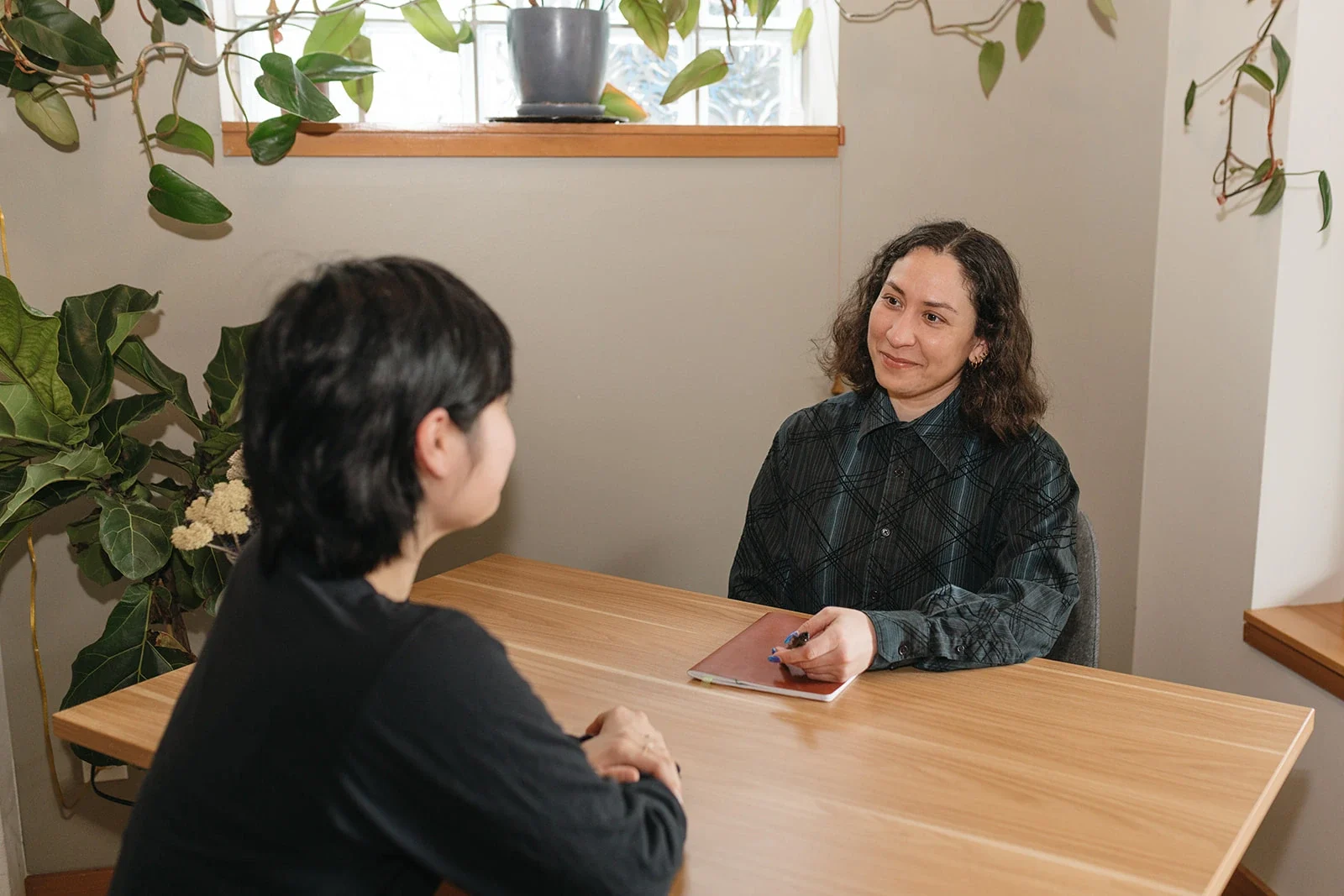
A person searching a counselor directory usually has one problem in mind and a second one they have stopped mentioning. The anxiety is the reason for the search. The neck that has hurt for two years and the back that goes out during the worst weeks get filed under "stress" and left alone. Mandala Medicine & Wellness in Portland is a clinic where a licensed counselor, acupuncturists and massage therapists share a roster, which makes it a useful place to think through a question many people never get to ask. When does it make sense to pair talk therapy with bodywork, and when does it not?
Therapy is the treatment
Start with the part that does the heavy lifting. The National Institute of Mental Health describes psychotherapy as "a variety of treatments that aim to help a person identify and change troubling emotions, thoughts, and behaviors," and notes it "can be used as an alternative to or alongside medication and other treatment options" (NIMH, reviewed February 2024). At Mandala that work happens with Madison Hollis, LPC, who sees individuals and couples and works with cognitive behavioral therapy, dialectical behavior therapy, mindfulness-based cognitive therapy, solution-focused brief therapy and attachment-based therapy, with a focus on anxiety, depression, trauma and dissociation, attachment, identity exploration and LGBTQ+ clients.
Oregon licenses professional counselors through the Board of Licensed Professional Counselors and Therapists, whose stated purpose is "protecting the public by identifying and regulating the practice of qualified professional counselors and marriage and family therapists" (OBLPCT). That license is the thing to look for first. Massage and acupuncture are not mental health treatments, and this article does not present them as one.
Why the body keeps coming up
The link between physical pain and mood runs both ways, and it is well documented. NIMH reports that "people who have a chronic disease are at a higher risk of developing depression," that people with depression are at higher risk of developing certain chronic conditions including pain, and that "people who have a chronic disease and depression tend to have more severe symptoms of both illnesses" (NIMH, revised 2024). Chronic pain is common enough that this overlap is not a niche concern: the CDC estimated that 20.9 percent of U.S. adults had chronic pain in 2021 (CDC, April 2023).
The same NIMH publication points to research suggesting that a "collaborative care approach," in which different clinicians provide mental and physical health care at the same location, can improve the overall health of people with depression. That research describes a specific primary care model, not an integrative clinic. But the underlying idea, that care goes better when the people providing it can talk to each other, is the one Mandala is organized around. Its counseling page says its therapists "work with the whole person, honoring the connection between emotional, physical, and relational health," and its about page notes that practitioners collaborate with primary care providers and specialists.
What bodywork can reasonably offer
The claims here should be sized to the evidence. For the pain itself, the NIH's National Center for Complementary and Integrative Health reports that acupuncture was more effective than no treatment for back and neck pain in studies, with relief comparable to NSAIDs (NCCIH, October 2022), and that massage may help neck or shoulder pain for a short time (NCCIH, May 2019). It is telling that the American College of Physicians' guideline for chronic low back pain lists acupuncture, mindfulness-based stress reduction and cognitive behavioral therapy on the same first-line menu (ACP, February 2017). Hands-on and talk-based approaches are not rivals in that guidance. They are options to combine.
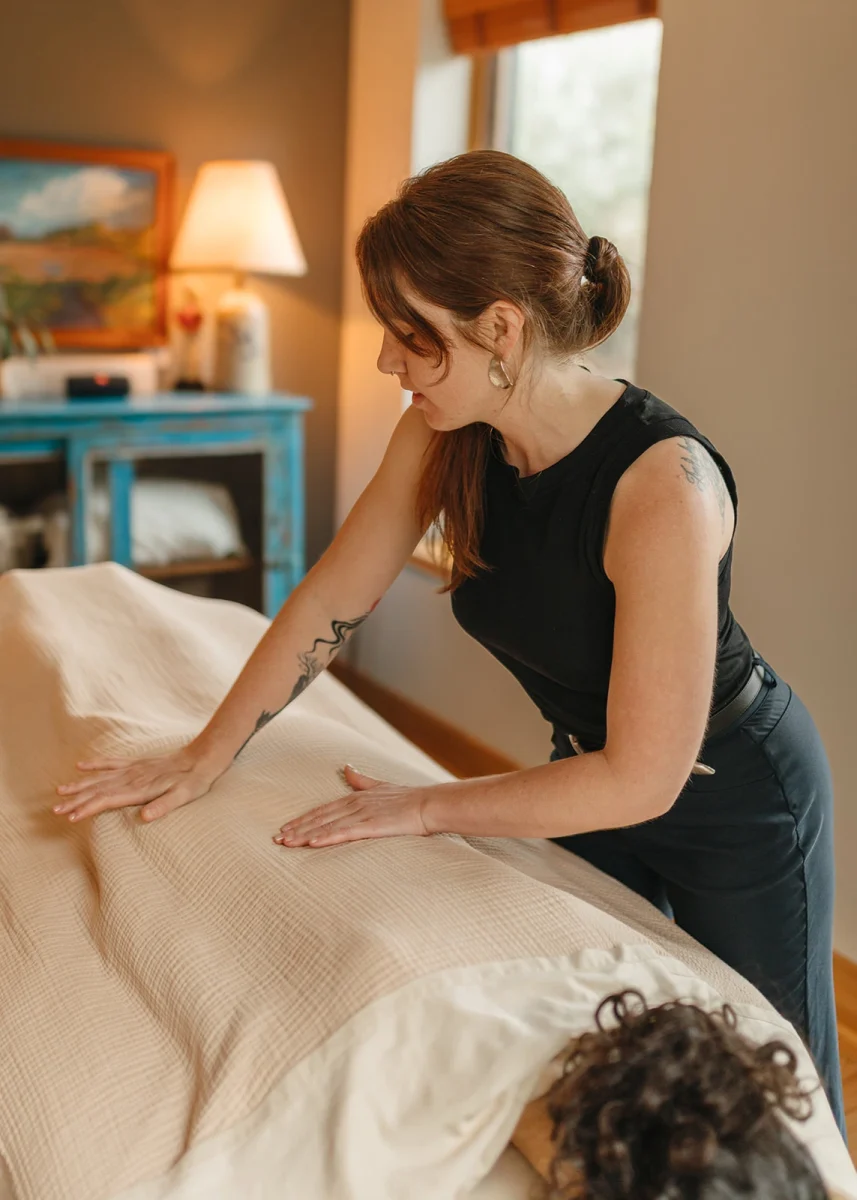
For stress in the everyday sense, the evidence is thin and should be described that way. Massage appears in breast cancer care guidelines as one of several approaches that may help with stress reduction and fatigue, which is a finding in one specific population. What Mandala's massage therapists describe in their own bios is more modest and more concrete: Ro Sullivan and Hannah Murphy both list nervous system regulation and chronic pain as focus areas. Those are reasonable things to want from an hour on a table. They are not a substitute for the hour in the therapist's chair.
When pairing makes sense
- You are already in therapy for anxiety, trauma or depression and also have a specific, nagging physical complaint: a stiff neck, headaches, low back pain. Treating the pain on its own merits is worthwhile, and the evidence for acupuncture and massage is strongest for exactly those complaints.
- Your therapist uses body-aware methods. Mindfulness-based cognitive therapy, one of Madison Hollis's modalities, includes body awareness practice. Whether bodywork supports that practice is a question to raise with the therapist, not something the research settles.
- You are pregnant or postpartum and already seeing a counselor. Dawn Larned, LMT focuses on pregnancy and postnatal massage.
- You want one front desk. The clinic bills most major insurers for all of its services, with the caveat that each practitioner is independent and networks differ, so the chart on the new patients page is the thing to check before booking two kinds of care.
When it does not
- If the goal is to avoid therapy. A person with depression or anxiety who books massage instead of counseling is treating the wrong thing. NIMH is direct about it: depression treatment "typically involves psychotherapy (in person or virtual), medication, or both."
- If touch is not welcome right now. Mandala describes its massage as trauma-informed and its clinic as queer-affirming and body-neutral, but none of that obligates anyone to be on a table before they want to be. Talk therapy first, bodywork later or never, is a complete plan.
- If the budget allows one thing. Choose the therapist.
Setting it up
Both kinds of appointment are booked through Mandala's online scheduling page, and the front desk, open weekdays 9 to 5 and Saturdays 9 to 3 at 503-758-9760, can answer questions about which practitioner takes which plan. The clinic is at 3125 E Burnside St, Portland, OR 97214, in a 1917 stone building near Laurelhurst Park with an ADA-accessible first floor. Details on the counseling side are on the mental health counseling page, and the massage roster is on the massage page.


