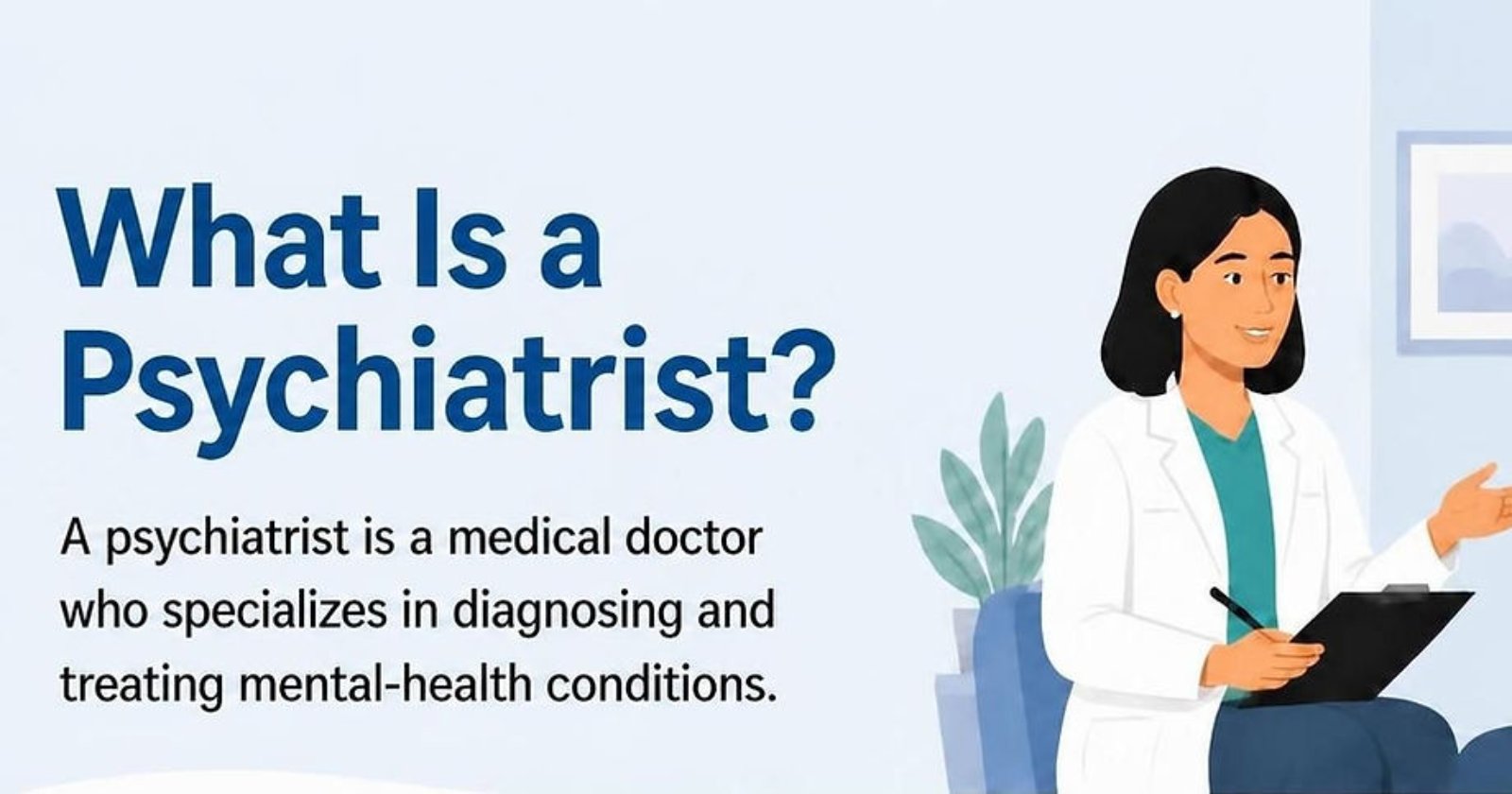
A psychiatrist is a medical doctor who specializes in diagnosing and treating mental health conditions. Psychiatrists may use medication, psychotherapy, lifestyle recommendations, care coordination, or a combination of approaches. Common conditions they treat include anxiety disorders, depression, bipolar disorder, PTSD, and schizophrenia.
What training does a psychiatrist receive?
In the United States, psychiatrists complete an undergraduate degree, four years of medical school, and a four year psychiatry residency. Some complete additional fellowship training.
After residency, psychiatrists may pursue board certification through the American Board of Psychiatry and Neurology. Psychiatrists must be licensed in the states where they practice.
Psychiatrists and psychologists are both mental health professionals who treat many of the same mental health conditions, such as depression, anxiety, and PTSD.
Their education and scope of practice differ. Psychiatrists attend medical school and complete residency training. Psychiatry training includes education in medical specialties, such as internal medicine and neurology, that may overlap with mental health symptoms and conditions. This allows them to evaluate medical contributors to mental health symptoms and prescribe medication. Additionally, psychiatrists receive training in several forms of psychotherapy during residency.
Psychologists complete doctoral training in psychology and commonly provide psychotherapy and psychological testing. Licensing rules vary by state.
How do I know whether I should see a psychiatrist or psychologist?
People may benefit from seeing a psychiatrist when they are considering medication, have symptoms that significantly affect daily life, have a complex or persistent mental health condition, or have medical conditions that may be contributing to changes in mood, thinking, or behavior.
A psychiatric evaluation can help clarify treatment options, which may include medication, therapy, referrals, or coordination with other healthcare professionals.
When available, receiving both medication management and psychotherapy from the same psychiatrist may be convenient for some patients.
Medication management is the process of evaluating symptoms, prescribing medication when appropriate, monitoring benefits and side effects, and adjusting treatment over time.
Psychiatrists are medical doctors who can prescribe psychiatric medications in accordance with state law.
Psychiatrists receive training in psychotherapy during residency, and some pursue additional training after residency. However, many psychiatrists focus primarily on medication management and do not offer ongoing psychotherapy.
Psychiatrists in private practice may have more flexibility to offer psychotherapy, depending on their training, practice model, and availability.
Some psychiatrists provide psychotherapy without medication, while others provide evaluation, referrals, or care coordination for patients who do not want medication. Available options depend on the psychiatrist’s training and practice model.


