About one in five American adults lives with chronic pain. The CDC put the 2021 figure at 20.9 percent, roughly 51.6 million people, and 6.9 percent reported pain severe enough to limit work or daily life on most days (CDC MMWR, April 2023). Most have already tried the obvious things. They arrive at a clinic like Mandala Medicine & Wellness on East Burnside with a neck that locked up after years at a desk, a low back that flares every few weeks, or a jaw that clenches when work gets heavy.
A clinic built for the combination
Mandala has been seeing these patients since 2014. The clinic occupies a renovated 1917 stone building near Laurelhurst Park, and since 2022 it has been owned and run by Lindsey and Jake Rockwell, both licensed acupuncturists. Sixteen practitioners work there: five acupuncturists, seven massage therapists, two naturopathic doctors, a physical therapist and a licensed counselor. The front desk coordinates care and handles insurance billing, so a patient can see an acupuncturist one week and a massage therapist the next without retelling the whole story or chasing two sets of paperwork.
The clinic describes its care as evidence-informed, and its about page notes that practitioners regularly collaborate with primary care providers, surgeons and other specialists. That matters for anyone whose pain has a medical cause still being worked up. Acupuncture and massage at Mandala are meant to sit alongside that care, not replace it.
What the evidence supports, and what it does not
Acupuncture and massage attract both overclaiming and reflexive dismissal, so it is worth being precise. The National Center for Complementary and Integrative Health, part of the NIH, summarizes the research this way: in studies of back and neck pain, acupuncture was more effective than no treatment, and its pain-relieving effect was comparable to that of nonsteroidal anti-inflammatory drugs. The same page reports moderate-quality evidence that acupuncture may reduce how often migraines occur (NCCIH, updated October 2022).
A Cochrane review of 33 trials and 8,270 people with chronic low back pain found that acupuncture was better than no treatment for pain and function immediately after a course of care. It may not outperform a sham procedure, and the reviewers wrote that the decision to use it "might depend on the availability, cost and patient's preferences." Side effects in those trials were rated minor or moderate (Cochrane, December 2020).
Massage has a thinner research base. Cochrane's 2015 review found that people with low back pain reported less pain after massage, but only at short-term follow-up, and the authors had low confidence in the finding. Adverse effects were minor (Cochrane, September 2015). NCCIH adds that massage may be helpful for neck or shoulder pain, with benefits that may last only a short time (NCCIH, May 2019).
Even so, both appear in mainstream guidance. The American College of Physicians recommends that acute or subacute low back pain be treated first with non-drug therapies such as superficial heat, massage, acupuncture or spinal manipulation, and lists acupuncture among the first-line options for chronic low back pain (ACP, February 2017).
Stress is where the claims should stay modest. NCCIH's acupuncture page does not address everyday stress at all, and massage shows up in breast cancer care guidelines as one of several approaches that may help with stress reduction and fatigue, which is a narrow finding in one specific population. Neither acupuncture nor massage is a mental health treatment. What they may offer is relief on the physical side of being wound tight: the tense shoulders, the clenched jaw, the back that hurts more during a hard month. A companion piece looks at when to pair talk therapy with bodywork.
What happens at a visit
Appointments are booked online through Mandala's Jane scheduling page. The front desk is open Monday through Friday from 9 to 5 and Saturdays from 9 to 3, and practitioners work seven days a week. The first floor is ADA accessible, there are four parking spots off the driveway, and TriMet stop 768 at Burnside and 32nd is a short walk.
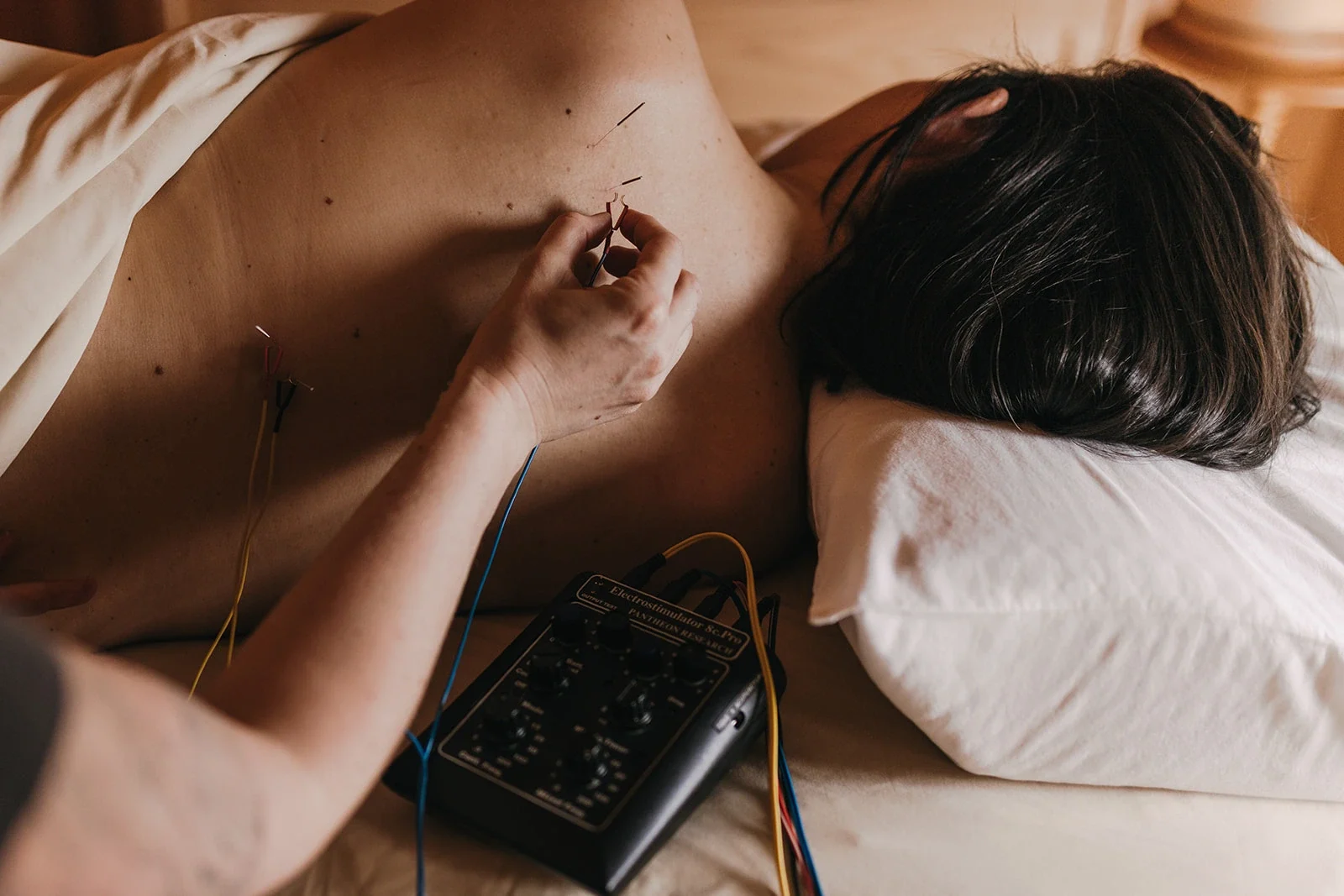
Acupuncture at Mandala uses thin, sterile needles, and depending on the practitioner a session may also include cupping, gua sha (myofascial scraping) or electro-stimulation. NCCIH notes that relatively few complications from acupuncture have been reported, and that the serious ones have come from nonsterile needles and improper delivery, which is a good argument for seeing a licensed acupuncturist. In Oregon that license comes from the Oregon Medical Board, which requires graduation from an accredited acupuncture program or equivalent practice experience, and current national board certification (Oregon Medical Board).
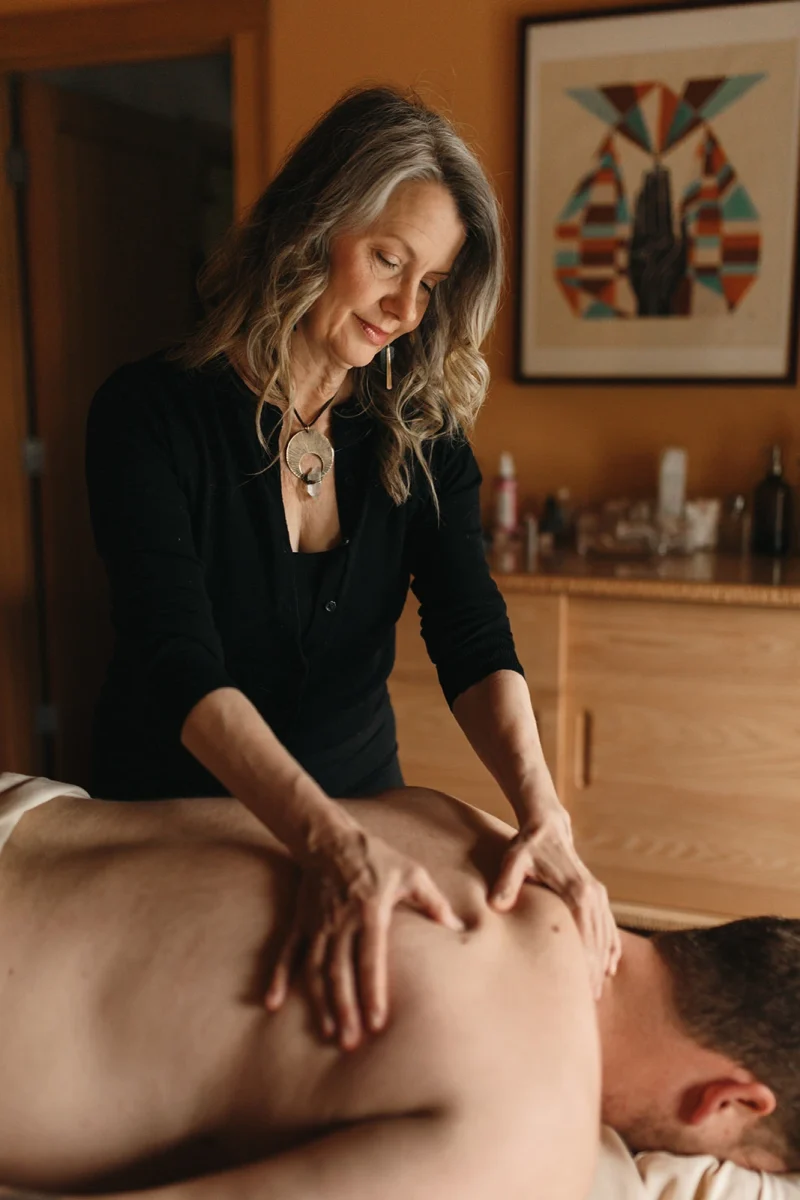
Massage at the clinic runs from gentle, nervous-system-focused work to deep tissue. The massage page lists Swedish, deep tissue, Thai, myofascial release, craniosacral, Rolfing, Tui Na, Lomi Lomi, Maya abdominal, structural integration and shiatsu meridian therapy among the styles its seven therapists offer, and it encourages patients to read bios before booking because most therapists blend several techniques in one session. Oregon massage therapists are licensed by the Oregon Board of Massage Therapists.
Choosing a practitioner
The bios are specific enough to be useful. On the acupuncture side, Jake Rockwell focuses on injury and surgical recovery, sports medicine and persistent pain, and uses electro-stimulation; Lindsey Rockwell on pelvic, low back and abdominal pain, endometriosis care and post-surgical recovery; Al Reed on acute and chronic pain, hormonal health and LGBTQ+ healthcare; Beth Hazzard, who also practices shiatsu, on fatigue, stress relief and pain. Among the massage therapists, Thomas Friedrich is a certified Rolfer working on injury recovery, Ro Sullivan and Hannah Murphy both list nervous system regulation and chronic pain as focus areas, Dawn Larned works with pregnancy and postpartum recovery, and Maco Monthervil with pelvic and persistent pain. The full roster is on the practitioners page.
Insurance and cost
Mandala bills most major insurers for all of its services, but each practitioner is independent and not every practitioner takes every plan. The new patients page carries the current in-network chart. The clinic says most visits carry a copay or coinsurance between $10 and $50, and it accepts HSA and FSA cards. Cancellations need 24 hours' notice; later changes carry a $75 charge, and no-shows are billed in full. Crash injuries are usually billed differently, through Oregon's PIP coverage.
Mandala Medicine & Wellness is at 3125 E Burnside St, Portland, OR 97214, 503-758-9760. In Willamette Week's 2024 reader poll it won Best Acupuncture and Best Massage in Portland. The clinic's own account of how acupuncture fits with its other services is on its acupuncture page.


