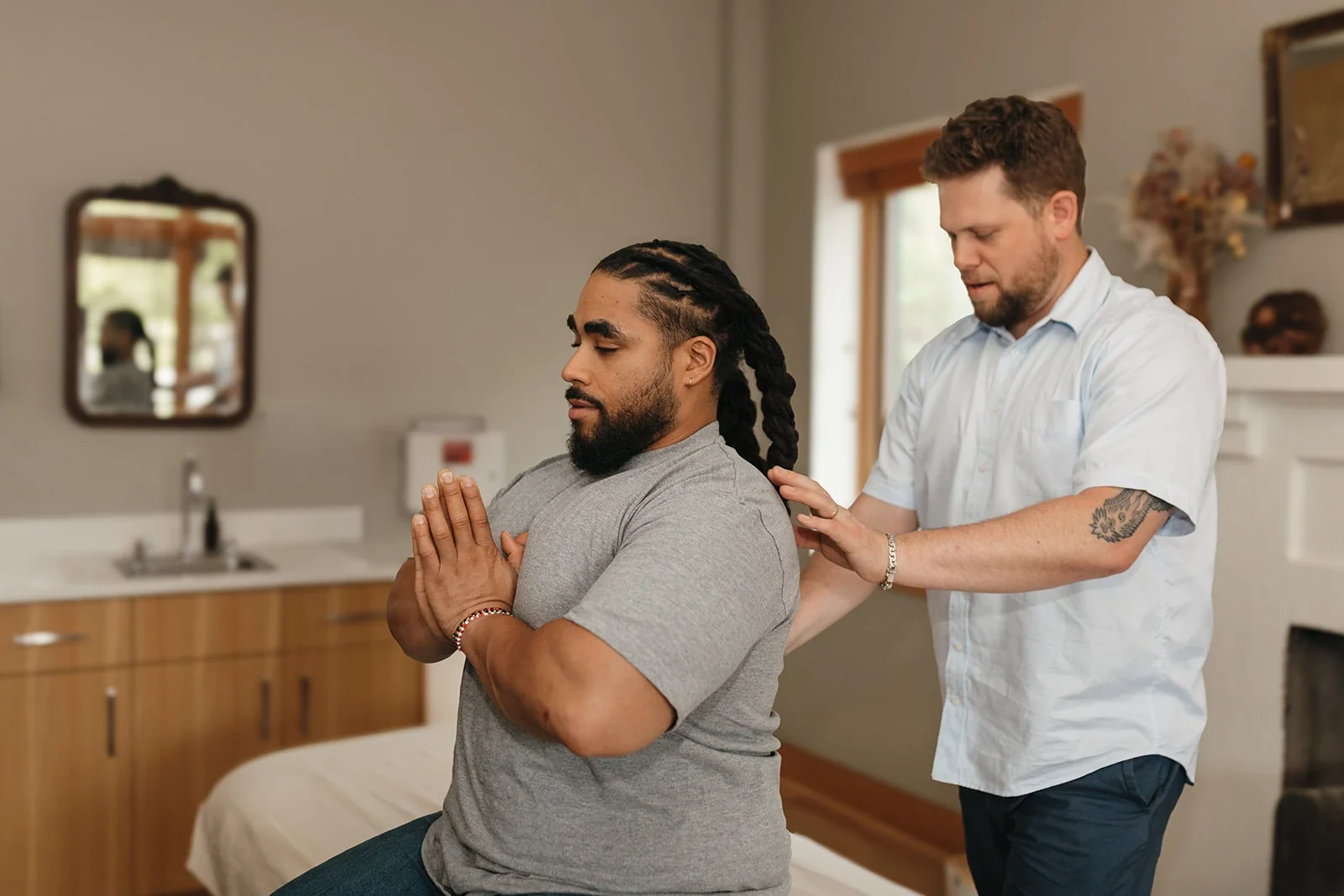
Oregon drivers carry a benefit many have never used. Personal injury protection, PIP, is required on every auto liability policy issued for a private passenger vehicle in the state, and it exists for exactly the situation people find themselves in after a crash: sore, rattled, and unsure who pays for what (ORS 742.520). Mandala Medicine & Wellness on East Burnside treats car and bike crash injuries with acupuncture, massage and physical therapy and bills that care to PIP claims. Here is how the benefit works, taken from the statute and the state's own consumer guidance.
What PIP pays, and the two limits that matter
Oregon's Division of Financial Regulation puts it plainly: "PIP pays for medical expenses, lost income and other benefits for you and your passengers who get hurt in a car accident. It doesn't matter who is at fault" (Oregon DFR). It is your own policy that pays, even when the other driver caused the crash.
Two limits are written into ORS 742.524. The medical benefit covers "all reasonable and necessary expenses of medical, hospital, dental, surgical, ambulance and prosthetic services incurred within two years after the date of the person's injury," and the required minimum is $15,000 per person. Policies can carry more, but $15,000 is the floor, and it is shared across every medical bill from the crash: the ambulance, the emergency room, imaging, and any follow-up care. The two-year clock starts on the day of the injury, not the day a person decides to get treatment.
PIP is also meant to go first. The division's consumer page notes that "your medical insurance will usually not cover medical expenses resulting from a car accident until your PIP coverage is exhausted" (Oregon DFR, auto insurance myths), and ORS 742.526 makes PIP primary for the policyholder, household family members and passengers injured in the insured vehicle. A cyclist or pedestrian hit by someone else's car is the exception: that driver's PIP is excess over the injured person's own coverage (ORS 742.526(1)(e)). Beyond medical costs, the statute provides a share of lost wages when a crash-related disability lasts at least 14 days.
Who can claim it
Under ORS 742.520 the benefit extends to the policyholder, family members living in the same household, passengers in the insured vehicle, and pedestrians struck by it. The word pedestrian is broader than it sounds. ORS 742.518 defines it as a person not occupying a self-propelled vehicle, which is why someone hit while riding a bicycle or walking may be able to claim against the driver's PIP. The details turn on the policy language and the facts of the crash, so a cyclist should confirm with the insurer or an attorney. This article is general information, not legal advice.
Where acupuncture and massage fit
The statute does not list provider types. It covers reasonable and necessary medical services and adds a presumption in the patient's favor: those expenses "are presumed to be reasonable and necessary unless the provider receives notice of denial of the charges not more than 60 calendar days after the insurer receives from the provider notice of the claim." In practice Mandala bills acupuncture, massage and physical therapy to PIP claims. The clinic's car accident care page states that no referral is needed to begin care there, that patients pay no copays on PIP visits, and that PIP typically covers the full cost of crash-related acupuncture and massage. The word "typically" is doing honest work in that sentence. Coverage ends when the dollar limit or the two-year window runs out, whichever comes first.
The evidence for this kind of care is strongest for the complaints that follow a collision: neck pain, back pain and headaches. The NIH's National Center for Complementary and Integrative Health reports that in studies of back and neck pain, acupuncture was more effective than no treatment, with pain relief comparable to nonsteroidal anti-inflammatory drugs (NCCIH, October 2022). The American College of Physicians recommends non-drug therapies such as superficial heat, massage, acupuncture or spinal manipulation as the first approach to acute and subacute low back pain (ACP, February 2017). Massage's benefit for low back pain has shown up mainly in the short term, with minor side effects (Cochrane, September 2015). A longer look at acupuncture and massage for chronic pain covers that research in more detail. None of this is a cure, and anyone with numbness, weakness, a possible head injury or worsening symptoms needs a physician first.
Passive and active care in the same building
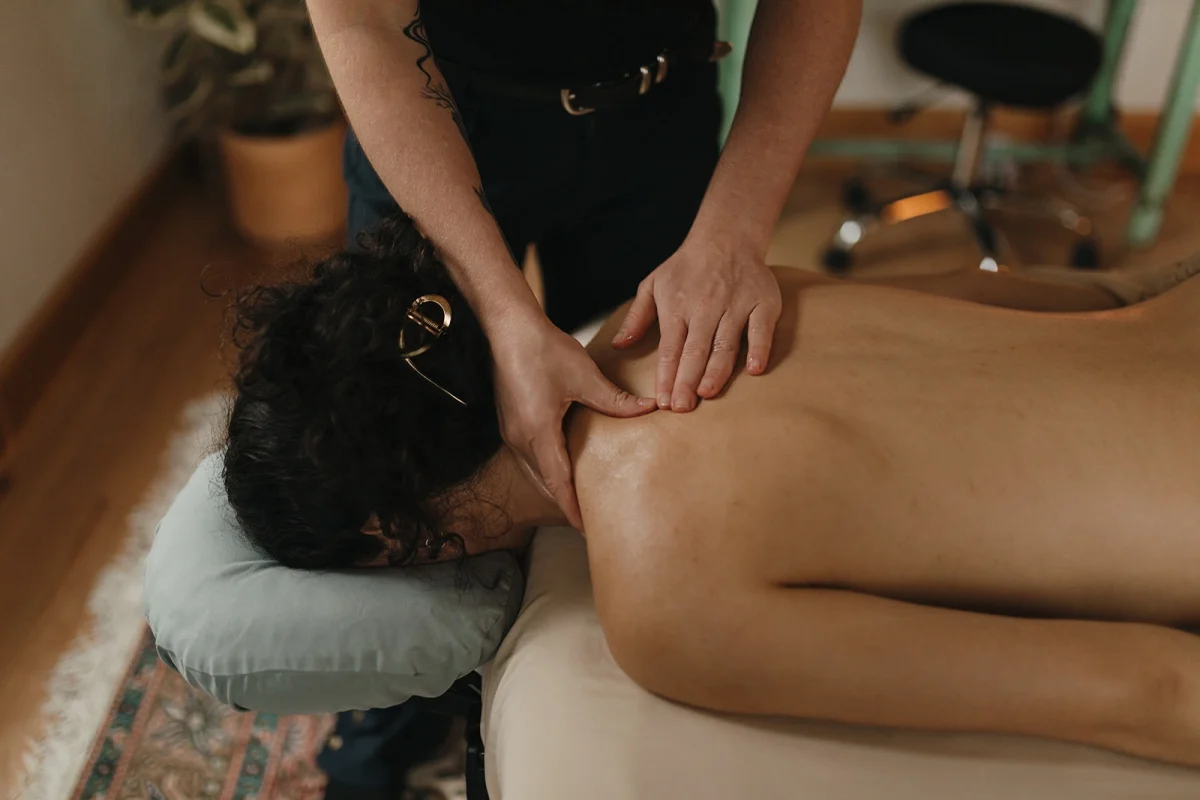
Mandala describes its crash recovery model as passive healing plus active healing: acupuncture and massage to ease pain and muscle guarding, physical therapy to rebuild strength and range of motion. Katy Kemp, DPT, leads the orthopedic physical therapy side with therapeutic exercise, manual therapy, biomechanics and yoga therapy, and lists traumatic injury and surgical healing among her focus areas. Jake Rockwell, LAc, a co-owner, focuses on injury and surgical recovery and uses electro-stimulation acupuncture. Thomas Friedrich, LMT, a certified Rolfer, works on injury recovery, and the clinic says PIP benefits can be used with any of its acupuncturists, massage therapists or its physical therapist. Reading the bios before booking is the clinic's own advice, and it is good advice.
What to do in the first two weeks
- Report the crash to your own auto insurer and ask to open a PIP claim. You will get a claim number; the clinic needs it to bill.
- Write down the date of the crash. The two-year medical window runs from the injury date.
- See a physician if there is any sign of head injury, fracture or nerve symptoms, and keep those records.
- Book a first visit at Mandala through its online scheduling page or by calling 503-758-9760, and bring the claim number and the adjuster's contact information.
- Keep your health insurance card handy. If you were a driver or passenger, it picks up remaining care once PIP is exhausted, subject to the plan's own rules. If you were on a bike or on foot and hit by someone else's car, your own coverage comes first and that driver's PIP is excess.
Mandala Medicine & Wellness is at 3125 E Burnside St in Portland, in a 1917 stone building near Laurelhurst Park, with an ADA-accessible first floor and four parking spots off the driveway. The front desk is open weekdays 9 to 5 and Saturdays 9 to 3. New patients can check the clinic's insurance and intake details on its start here page.


