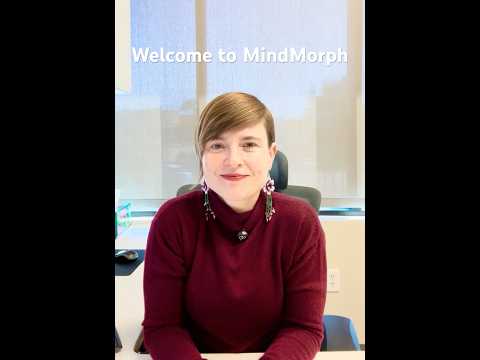
1.Manifest Counseling PDX, MA, LPC, LMHC, NATCVerified
Online Only, Portland, OR
ADHD · Anxiety · Codependency
manifestcounselingpdx.com · orcounselors.com/provider/manifest-counseling-pdx
Whether you are navigating dating, dealing with relationship conflict, or processing a breakup, Oregon relationship therapists help you understand patterns, improve communication, and build healthier connections.
263 providers found
Oregon Counselor Directory lists hundreds of therapists listed on Oregon Counselors who specialize in relationship issues as of April 2026 — couples in distress, attachment-based individual work for people who keep landing in similar patterns, navigating breakups and divorces, family-of-origin work, friendship and workplace relational struggles, and ethical non-monogamy or open relationships. Many offer telehealth, many accept Oregon Health Plan, many offer sliding-scale fees. Common evidence-based approaches: Emotionally Focused Therapy (EFT) — the most-researched couples modality — Gottman Method, Imago, Internal Family Systems for the inner work that drives outer patterns, attachment-based individual therapy, and Discernment Counseling for couples who aren't sure whether to commit to repair or end. Whether you're working on a relationship or working on yourself within one, the directory's relationship specialists can help.
Enter a city to search within ~30 miles, telehealth therapists are shown statewide.
Showing the first 8 of 263 results.
Online Only, Portland, OR
ADHD · Anxiety · Codependency
Telehealth · $175–$225 per session · Sliding scale · Accepting new clients
manifestcounselingpdx.com · orcounselors.com/provider/manifest-counseling-pdx
(541) 241-6413
Online / Remote Only at this time, Sisters, OR 97759
Anxiety · Depression · First Responders
Telehealth · $150–$225 per session · Sliding scale · Waitlist
maryhoisingtonlmft.com · orcounselors.com/provider/mary-hoisington-sisters-or
2206 SE Washington St., Milwaukie, OR 97222
Anxiety · Autism · Behavioral Issues
In-person & Telehealth · Sliding scale · Accepting new clients
trueyoutherapyandwellness.com/meet-our-therapists/mackenzie-phelps · orcounselors.com/provider/mackenzie-phelps-milwaukie
(541) 550-7940
296 Southwest Columbia Street, Bend, OR 97702
ADHD · Anxiety · Depression
In-person & Telehealth · $100–$190 per session · Sliding scale · Accepting new clients
bcbtherapy.com · orcounselors.com/provider/randy-wild-bend
(503) 295-6265
4110 SE Hawthorne Blvd, #324, Portland, OR 97214
ADHD · Adults who are autistic or otherwise neurodivergent · Anxiety
Telehealth · $280–$315 per session · Accepting new clients
portland-counseling.com · orcounselors.com/provider/kate-mcnulty-portland
400 E 2nd Ave, Ste 104E, Eugene, OR 97401
Addiction · ADHD · Alcohol Use
In-person & Telehealth · $150–$250 per session · Sliding scale · Accepting new clients
shaneknoxtherapy.com · orcounselors.com/provider/shane-knox-eugene-1
Portland, OR 97232
Chronic Illness · Open Relationships Non-Monogamy · Relationship Issues
Telehealth · From $200 per session · Accepting new clients
noelquigleylpc.com · orcounselors.com/provider/nol-quigley-portland
(503) 928-6767
Portland, OR 97214, Portland, OR 97217
Child or Adolescent · Coping Skills · Depression
In-person & Telehealth · Up to $200 per session · Accepting new clients
blueartt.com · orcounselors.com/provider/beth-purcell-blueartt-portland
MA, LPC, LMHC, NATCPortland, ORTelehealth


Professional Counselor Associate; Marriage & Family Therapist AssociateMilwaukie, ORIn-person & Telehealth

MS, LPCBend, ORIn-person & Telehealth

LCSWPortland, ORTelehealth

LMFTEugene, ORIn-person & Telehealth

LPCPortland, ORTelehealth

LPC, LMHC, ATR-BCPortland, ORIn-person & Telehealth
Meet these providers before you reach out.
From Oregon providers writing about this topic.

I am not a prescriber. I do not recommend medications or comment on what anyone should take. What I can do is explain how the two kinds of help differ, because people are often choosing between them without being told they are not the same thing.

In Oregon, a 14-year-old can consent to their own outpatient mental health treatment. That surprises most parents and most teenagers. Here is what the law actually says and how I work with it in practice.

If you came looking for an autism evaluation, I want to answer that in the first sentence rather than the last. I do not provide one. Here is what I can do instead, and where assessment actually comes from.

Welcome to iFinish Strong Enrichment Center, where we believe that understanding your mental health can be an important step toward healing, growth, and living well. I’m Dr. Sandra Stubbs, and I invite you to visit us at ifscounseling.net. Our website is a great place to learn more about who we…

If you’re constantly overwhelmed, overthinking, or struggling to focus, you might wonder: Is this anxiety – or could it be ADHD? For many women, the answer is surprising. ADHD in women is frequently misdiagnosed as anxiety, leading to years of frustration and treatment that only partially helps. Understanding the difference…

Over the past several years, conversations about mental health have become more common across Oregon. As more people speak up about struggling with mental health issues, the stigma surrounding mental health conditions like depression has shown signs of receding in Oregon. More people are seeking help, employers are expanding mental…
Common questions about this coverage in Oregon.
Oregon Counselors Directory lists hundreds of therapists specializing in relationship issues across the state. These providers offer various approaches to help couples and families navigate their challenges. A significant many therapists listed on Oregon Counselors provide telehealth sessions, enabling residents from diverse regions of Oregon to access support remotely. Of these, many accept the Oregon Health Plan (OHP), offering affordable therapy options to eligible Medicaid recipients. Additionally, many therapists offer sliding scale fees, accommodating clients with varying income levels. Therapists may utilize evidence-based methods such as Emotionally Focused Therapy (EFT), Cognitive Behavioral Therapy (CBT), or Solution-Focused Brief Therapy (SFBT) to address relationship issues.
Oregon Advantage
Oregon leads the nation in access to psychedelic-assisted and integrative mental health therapies.