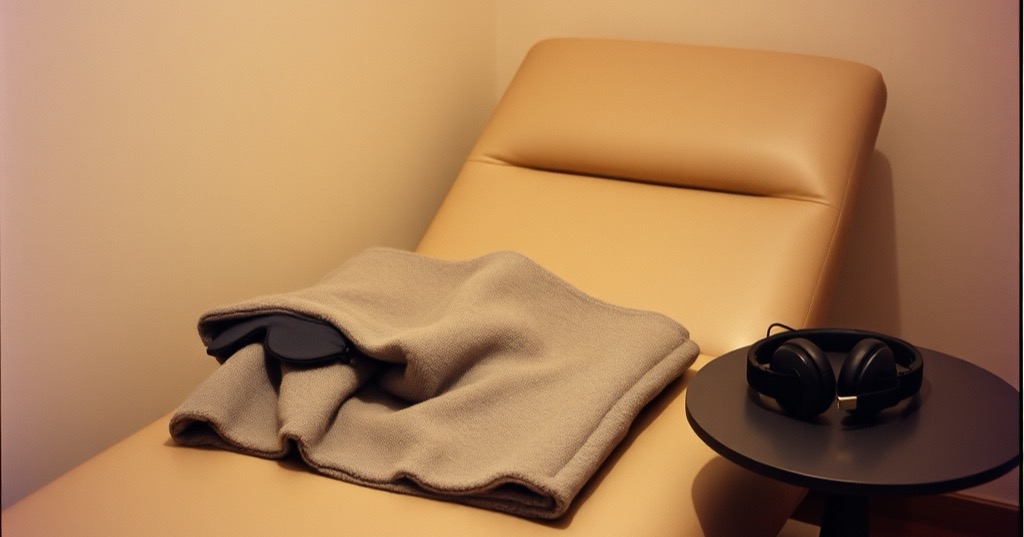
Ketamine is the only psychedelic legally available by prescription in the United States. In Oregon, it is also the most clinically mature: the first dedicated ketamine clinics opened here in 2017, and the field has had nearly a decade to develop protocols, billing infrastructure, and a working understanding of where it helps and where it does not.
This is a 2026 snapshot of the Oregon ketamine treatment scene, written for clients evaluating it as an option and for therapists who may be asked to provide integration support around a course of treatment they did not prescribe.
The two delivery models: clinic IV vs. KAP
Practically all ketamine for mental health in Oregon is delivered through one of two models:
- Medical clinic IV/IM ketamine. A nurse or physician administers a series of 40-minute intravenous or intramuscular infusions, usually six sessions over two to three weeks. The client lies in a recliner with eyeshades and music. There is no therapist in the room. Pricing: $400–$700 per session, $2,400–$4,200 for a course.
- Ketamine-assisted psychotherapy (KAP). A psychiatrist or qualified prescriber writes for sublingual lozenges (typically 100–400 mg) and an Oregon-licensed therapist provides a 90- to 180-minute dyadic session during the dissociative window. Pricing: $500–$900 per session, often after an initial $2,000–$3,500 prescriber intake.
The two models are not interchangeable. IV clinics are optimized for fast antidepressant onset in treatment-resistant cases, they work, they are repeatable, and they do not require therapist availability. KAP is slower, more expensive, and more therapist-intensive, but the integration is built in. Maria Steiner-Renoir / MindMorph LLC in Portland and Peter H. Addy, PhD are among Oregon's better-known KAP providers; both routinely refer clients to medical IV clinics when the indication favors that model.
What ketamine actually treats
The strongest evidence base, supported by multiple meta-analyses, is for treatment-resistant depression: defined as a major depressive episode that has not responded to at least two adequate trials of standard antidepressants. Ketamine produces a measurable mood lift in roughly 60–70% of treatment-resistant clients within 24–48 hours of the first infusion. The lift is not durable without maintenance dosing or some combination of antidepressant and active psychotherapy.
Beyond depression, the evidence is weaker but accumulating for:
- Severe anxiety disorders, including social anxiety and generalized anxiety
- PTSD and complex trauma (especially when paired with KAP)
- Obsessive-compulsive disorder
- Substance use disorder (especially alcohol)
- Chronic suicidal ideation
Ketamine is not indicated for bipolar I in a manic state, active psychosis, uncontrolled hypertension, or untreated cardiac conditions. A competent prescriber will screen for all of these.
Insurance, in 2026: what's covered and what isn't
The Spravato (esketamine nasal spray) FDA approval changed Oregon's coverage picture significantly. Most commercial Oregon plans, Regence, Moda, PacificSource, Providence, and Aetna: now reimburse for in-office Spravato administered at a certified REMS site for treatment-resistant depression. Prior authorization is universal; expect 5–15 business days.
Generic racemic ketamine (the IV/IM/sublingual form most commonly used) is still considered off-label and is rarely reimbursed by commercial plans. The medical visit portion may be billable at office-visit rates; the infusion itself is typically out-of-pocket. Oregon Health Plan covers Spravato in approved cases through CCO formularies but does not reimburse for racemic ketamine treatment of mental health conditions in most CCOs.
Dosing, sessions, and the rhythm of treatment
A typical ketamine treatment arc looks like:
- Weeks 1–3: Six infusions (or 8 KAP sessions), spaced 2–3 per week. This is the induction phase.
- Weeks 4–8: Therapy at standard cadence (weekly), no ketamine. This is the integration phase.
- Months 3–12: Booster sessions every 4–8 weeks as indicated, plus continuing therapy.
The induction phase tends to over-perform: clients feel dramatically better and underestimate how much of that is state-dependent. The maintenance phase is where the actual durable mood change either takes root or doesn't, and where psychotherapy is the load-bearing variable.
If your ketamine clinic does not require, recommend, or coordinate with active psychotherapy, you are buying only half a treatment.
What to ask a ketamine provider before starting
- What is your screening protocol? A good answer mentions medical history, current medications (lithium and benzodiazepines change the calculation), suicidality assessment, and at least one prior treatment trial.
- What is your therapist-collaboration policy? The best ketamine prescribers actively want to see your therapist's notes, and send their own.
- What happens if I don't respond? Watch for clinics that just keep dosing you. The data says about 30% of clients will not respond, and a competent provider stops, rather than escalating.
- How are you measuring outcomes? PHQ-9, GAD-7, or a standardized symptom inventory taken at intake and every two weeks is the floor.
Finding a ketamine-aware therapist in Oregon
The directory tracks providers with explicit ketamine-assisted psychotherapy or psychedelic-affirming therapy training. The largest concentration is in Portland, with several in Eugene, Bend, and Ashland. Luke Allen, PhD and Laura Birchard, LPC are among the depth-oriented Portland clinicians frequently consulted for ketamine integration support.
If you are considering ketamine, the first appointment to make is not with a clinic. It is with a therapist who can help you assess whether the model fits your case, prepare for the dissociative experience, and hold the integration window between sessions. Take the match quiz to start with an Oregon therapist who has ketamine-aware training, or filter the full directory of KAP-trained providers.


